US technology companies, including Apple, have narrowly avoided a massive price hike on gadgets after former President Donald Trump reversed course on a wave of steep tariffs originally set to take effect this week. The move temporarily shields the industry from financial pressure that could have sent the cost of consumer electronics soaring.
Amid growing concerns from Silicon Valley, Trump announced a 90-day pause on higher tariffs for most countries — excluding China — in what the White House described as a strategic play to extract better trade terms. The exemption list now includes a range of vital tech components such as semiconductors, memory cards, and solar cells, all essential to the production of smartphones, laptops, and other electronic devices.
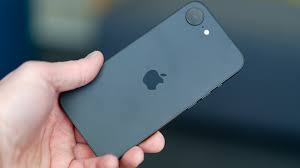
For Apple in particular, the decision comes as a major relief. Analysts had warned that if the full weight of proposed tariffs had been passed down the supply chain, iPhone prices in the US could have tripled. With 80% of Apple’s US-bound iPhones still manufactured in China, the stakes were high for both the company and its customers.
Apple and other electronics firms have been scrambling in recent years to reduce their reliance on Chinese manufacturing. India and Vietnam have emerged as alternative production hubs, with Apple reportedly ramping up assembly operations in India in response to the escalating trade tensions.
While US-bound imports from many countries are safe — for now — the same can’t be said for Chinese goods. Trump escalated tariffs on China to a staggering 145%, citing the country’s retaliatory 84% tariffs on US exports as justification. The former president framed the decision as a response to what he described as unfair trade practices and a means to restore American manufacturing competitiveness.
The 90-day pause effectively gives global suppliers, especially those in friendly nations, a chance to renegotiate their trade terms with the US. Meanwhile, the tech industry will be watching closely to see whether this is a temporary detour or the beginning of a longer-term decoupling from Chinese supply chains.
Despite the relief, the uncertainty lingers. A blanket 10% tariff still looms for non-retaliatory countries come July, leaving room for further shifts in US trade policy. For now, however, US tech firms are enjoying a rare moment of breathing space in an otherwise volatile trade environment.