
















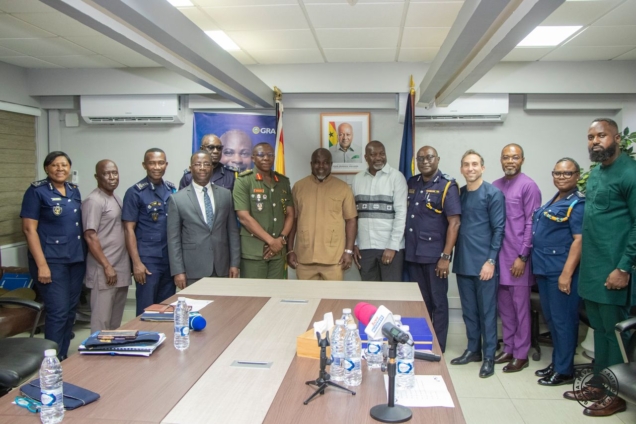
The Managing Director of Coca-Cola Bottling Company Ghana, Mr. Felix Gomis, has raised the red flag over a growing threat to Ghana’s manufacturing sector—cross-border smuggling.
Speaking during a high-level engagement with the leadership of the Ghana Revenue Authority (GRA), Mr. Gomis revealed that over 150,000 crates of Coca-Cola products, valued at approximately US$700,000, are being smuggled monthly from Nigeria into Ghana.
According to him, the illicit influx not only undermines local production but also drains the national economy by creating massive tax revenue leakages. He warned that the unchecked smuggling of beverages could deal a significant blow to local industry, threaten thousands of jobs, and disrupt the government’s domestic revenue targets.
“This isn’t just about Coca-Cola—this is a national issue,” Gomis stressed. “We need stronger collaboration across institutions to close the loopholes and protect Ghana’s revenue and production base.”
Gomis noted that the smuggled products offer unfair price competition to goods manufactured locally, distorting market dynamics and putting pressure on companies that comply with local tax regulations. He expressed concern that if the situation persists, it could stifle future investments and expansion efforts by multinationals operating in Ghana.
“We’ve been in Ghana for over 30 years, investing heavily and creating employment. Smuggling makes it difficult for us to remain competitive and continue contributing to national development,” he added.
In response, the Commissioner of the Customs Division, Brigadier General Glover Ashong Annan, acknowledged the gravity of the issue and assured Coca-Cola and other private sector actors of GRA’s firm commitment to cracking down on smuggling networks.
“We are fully aware of the scale of damage smuggling inflicts on formal businesses,” Brigadier General Annan stated. “Through intelligence sharing and coordinated enforcement, we are ready to confront this challenge head-on.”
Commissioner-General of the GRA, Anthony Kwasi Sarpong, further emphasized the broader socio-economic implications of smuggling, pointing out that revenue lost through such illegal activity deprives Ghanaian citizens of essential services.
“Every cedi lost to smuggling is a missed opportunity for national development,” Sarpong noted. “Whether it’s a child’s education or healthcare for a mother in a rural community, tax revenue underpins it all.”
He praised Coca-Cola for its longstanding role in Ghana’s industrial space and described the meeting as a catalyst for deepening public-private sector cooperation to combat economic sabotage.
The engagement between Coca-Cola and GRA marks a significant step in creating a united front against illegal trade practices. With cross-border smuggling on the rise, industry leaders are urging government institutions to tighten border controls, increase surveillance, and engage more robustly with the private sector to safeguard local production.
Mr. Gomis concluded by calling for urgent, coordinated action: “This is the moment to protect what we’ve all built together. We must act now, not just for business, but for the country.”






