
















Ghana’s heavy dependence on road transport for the movement of passengers and cargo is putting growing pressure on the country’s road infrastructure, with calls for railway development to become a major component of the government’s Big Push infrastructure programme.
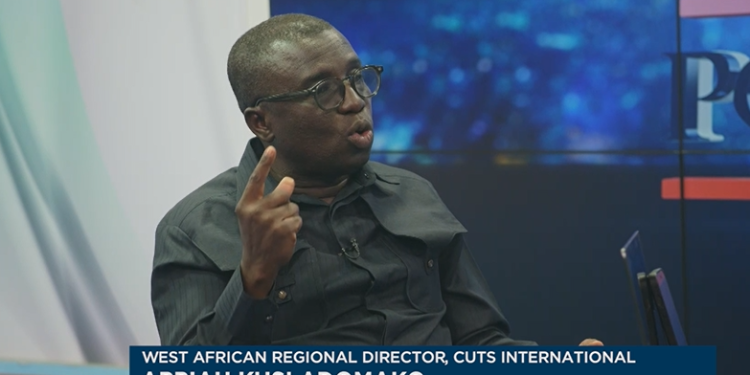
West African Regional Director of CUTS International, Appiah Adomako Kusi, said a stronger railway system could significantly reduce the number of heavy-duty trucks using the roads and help preserve expensive road infrastructure.
According to him, transporting large volumes of cargo by rail would not only reduce the strain on roads but also lower the frequency of road damage caused by heavy vehicles, thereby reducing the long-term cost of road construction and maintenance.
Mr Kusi made the remarks in an interview on Channel One TV’s The Point of View, where he discussed Ghana’s declining railway infrastructure and the increasing attention other African countries are giving to rail development.
He said the government’s infrastructure agenda should not focus predominantly on roads, arguing that railways could provide a complementary transport system capable of carrying large quantities of goods more efficiently.
“The Big Push should also be looking into a railway network so that we can reduce the volume of cars on the road because it takes so much to construct a road,” he said.
Mr Kusi also highlighted the potential of rail transport to improve passenger mobility by linking major cities and economic centres. He said efficient rail connections could allow workers to live farther from their places of employment while still commuting within relatively short periods.
Beyond passenger movement, he identified cargo transportation as one of the areas where railway investment could have the greatest impact, particularly by shifting heavy freight from roads onto rail.
Mr Kusi further referred to a 2022 JICA analysis of Ghana’s Railway Master Plan, which he said identified investment opportunities to improve connectivity among major parts of the country, including Accra, Kumasi and Paga, as well as mining communities in the Western Region.
He argued that integrating rail development into the Big Push would complement ongoing and planned road projects while creating a more balanced national transport system.
A stronger rail network, he said, would ultimately improve the movement of people and goods, support economic activity and help Ghana preserve its road infrastructure by reducing the burden of heavy-duty traffic.






