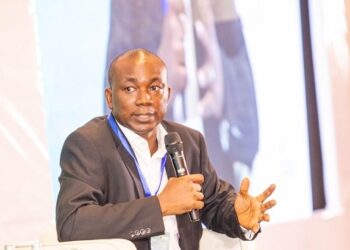
Despite recent signs of economic stability, Ghana risks sliding back into crisis unless deeper structural problems are addressed, renowned business management consultant Dr Ishmael Yamson has cautioned.
Delivering the opening address at the University of Ghana’s 77th Annual New Year School and Conference on Tuesday, Dr Yamson acknowledged what he described as a strong first-year performance by government in 2025, pointing to the appreciation of the cedi and the sharp fall in inflation as notable gains. However, he stressed that these improvements should not be mistaken for a lasting economic cure.
Using a series of medical analogies, the CEO of Ishmael Yamson & Associates said the economy had been stabilised but not transformed, warning that temporary relief could quickly fade without decisive action. According to him, the current recovery reflects crisis management rather than long-term healing.
Dr Yamson argued that sustainable national progress would require more than policy announcements or fresh borrowing. He called instead for a comprehensive reset that tackles deep-seated structural weaknesses, cultural challenges and long-standing inefficiencies in economic management.
He painted a picture of widespread frustration beneath the surface of the apparent calm, describing a quiet loss of confidence among citizens and investors. In his view, this sense of uncertainty—rather than open unrest—poses a serious threat to economic renewal, as businesses remain unable to plan beyond the short term due to persistent volatility in prices, exchange rates and macroeconomic conditions.
The erosion of the middle class, he said, had further weakened economic resilience, as inflation over the years had eaten into savings and undermined financial security, leaving households vulnerable even amid recent improvements.
Dr Yamson identified three critical obstacles Ghana must overcome to avoid repeating cycles of crisis: an economic structure overly exposed to external shocks, a governance culture that tolerates impunity, and a persistent gap between ambitious policy visions and effective execution.
He challenged policymakers, academics and participants at the New Year School to confront these realities honestly, noting that the conference theme—“Building the Ghana we want together for sustainable development”—would remain aspirational unless matched with discipline, consistency and political will.
Warning against complacency, Dr Yamson concluded that slogans alone could not secure the future for Ghana’s youth, insisting that only a stable, predictable and well-executed economic framework could transform the current recovery into lasting prosperity.