
















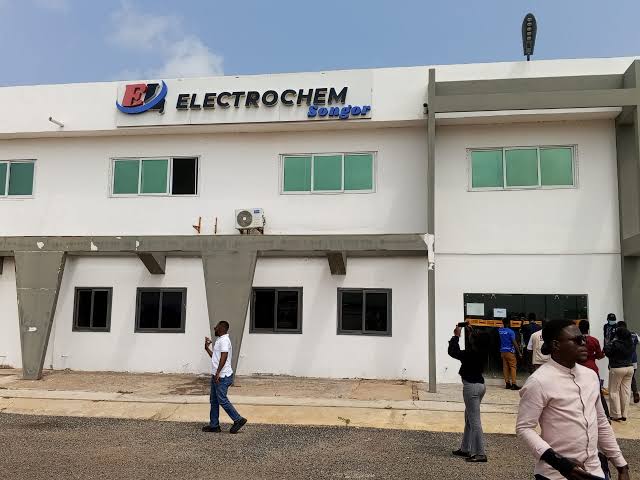
Electrochem Ghana Limited has suffered another setback in its efforts to scale up salt production after heavy rains flooded all of the company’s salt pans, disrupting operations and raising fresh questions about its ability to meet key financial obligations.
The flooding comes at a time when the Ada-based salt producer has been pursuing an aggressive mechanisation programme aimed at increasing production volumes, improving operational efficiency and positioning the company as a major player in Ghana’s industrial salt industry.
Company officials have acknowledged that one of Electrochem’s biggest operational challenges has been low production volumes, making mechanisation a critical part of its long-term strategy. Increased production is expected to boost the company’s annual metric tonnage, strengthen revenues and improve its capacity to service financial commitments.
However, the latest floods have temporarily halted production after floodwaters submerged the salt pans, delaying harvesting activities and affecting output.
Industry analysts say the disruption could have financial implications, particularly as the company works to meet its debt obligations to the Ghana Revenue Authority (GRA) and the Minerals Income Investment Fund (MIIF).
Earlier this month, the GRA sealed Electrochem’s administrative offices in an enforcement exercise to recover an outstanding tax liability of GH¢8.6 million, which the Authority said had accumulated since 2021.
The tax enforcement formed part of the GRA’s nationwide campaign to improve tax compliance and recover outstanding government revenue from defaulting companies.
Although the company has since engaged the tax authority over the outstanding liability, analysts note that prolonged production disruptions could affect cash flow and delay efforts to clear the tax debt.
Electrochem is also servicing financing obtained from the Minerals Income Investment Fund (MIIF), which has invested heavily in the company’s expansion plans under Ghana’s strategy to develop a competitive salt industry capable of supporting the petrochemical and industrial sectors.
The MIIF financing was intended to support infrastructure development, mechanisation and the expansion of salt production at the Songor Lagoon. Market observers say sustained production growth will be crucial for the company to generate sufficient revenue to comfortably meet its repayment obligations while continuing to finance expansion projects.
Despite the latest setback, company management says it remains committed to strengthening the resilience of its operations against extreme weather events.
Plans are underway to invest in innovative drainage and water management systems designed to rapidly evacuate excess rainwater from production areas while preventing flooding of nearby communities.
The proposed drainage infrastructure is expected to improve the resilience of the company’s salt pans, minimise production interruptions during the rainy season and support year-round operations.
Analysts believe the success of these investments will be critical not only to increasing production volumes but also to strengthening Electrochem’s financial position as it seeks to fulfil its obligations to creditors, including MIIF and the GRA.
With Ghana positioning salt as one of its strategic mineral resources under the government’s industrialisation agenda, Electrochem’s recovery from the flood-induced disruption is expected to be closely watched by investors, policymakers and stakeholders in the mining and industrial minerals sector.






