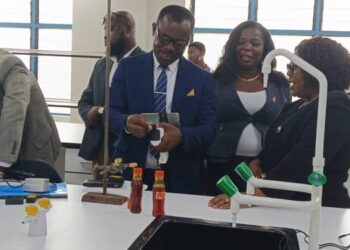
A powerful message of empowerment and innovation echoed through the halls of OLA Girls Senior High School in Ho as Women in Engineering (WinE), Volta Region, marked the 2025 International Women in Engineering Day by engaging students with real-world problem-solving scenarios.
The event, themed “Together We Engineer”, sought not only to mark the global day but to ignite passion for STEM fields—particularly engineering—among young female students, who are often underrepresented in the profession.
In a captivating and interactive session, the Volta and Oti Regional Coordinator of WinE, Mrs. Rosina Maku Matey, speaking on behalf of WinE national president Mrs. Jane Naki Tetteh-Anowie, challenged the students to think beyond traditional classroom concepts. She posed everyday engineering dilemmas—like how to deliver clean water to remote schools or how to power rural hospitals—to show the vital role engineers play in societal transformation.
“Engineering is how we change the world. It’s how we design solutions to real-life issues,” Mrs. Matey told the girls, stressing that engineering isn’t just for men or those who enjoy machines, but for anyone eager to make an impact. “We need more girls solving these problems.”
She emphasized that women are critical players in the drive toward inclusive innovation, urging students to view themselves as builders of a better world. Her words were echoed by Dr. Mrs. Patricia Asantewaa-Tannor, Vice President of the Ghana Institution of Engineering (Volta/Oti Region), who underscored the importance of decisions made at the senior high school level.
“You’re already laying the foundation for your future,” she said. “Your interest in math and science now can lead to careers in civil, biomedical, or environmental engineering—and those careers are open to you.”
Rather than simply listing the benefits of engineering careers, the speakers invited the girls to see engineering as a form of activism—a way to create safer roads, cleaner energy, and stronger communities.
The impact was immediate. Several students admitted they had never considered engineering as a viable path—until now.
“I used to think engineering was for boys, or that it was too hard,” one student said. “But now I see it as a way to help people and solve big problems. That excites me.”
The event also celebrated the progress made by Ghanaian women in engineering, while calling for sustained efforts to mentor and support girls through education and beyond.
WinE’s message was clear: the future of engineering is inclusive, and the world’s biggest challenges demand diverse perspectives—especially those of young women ready to lead.