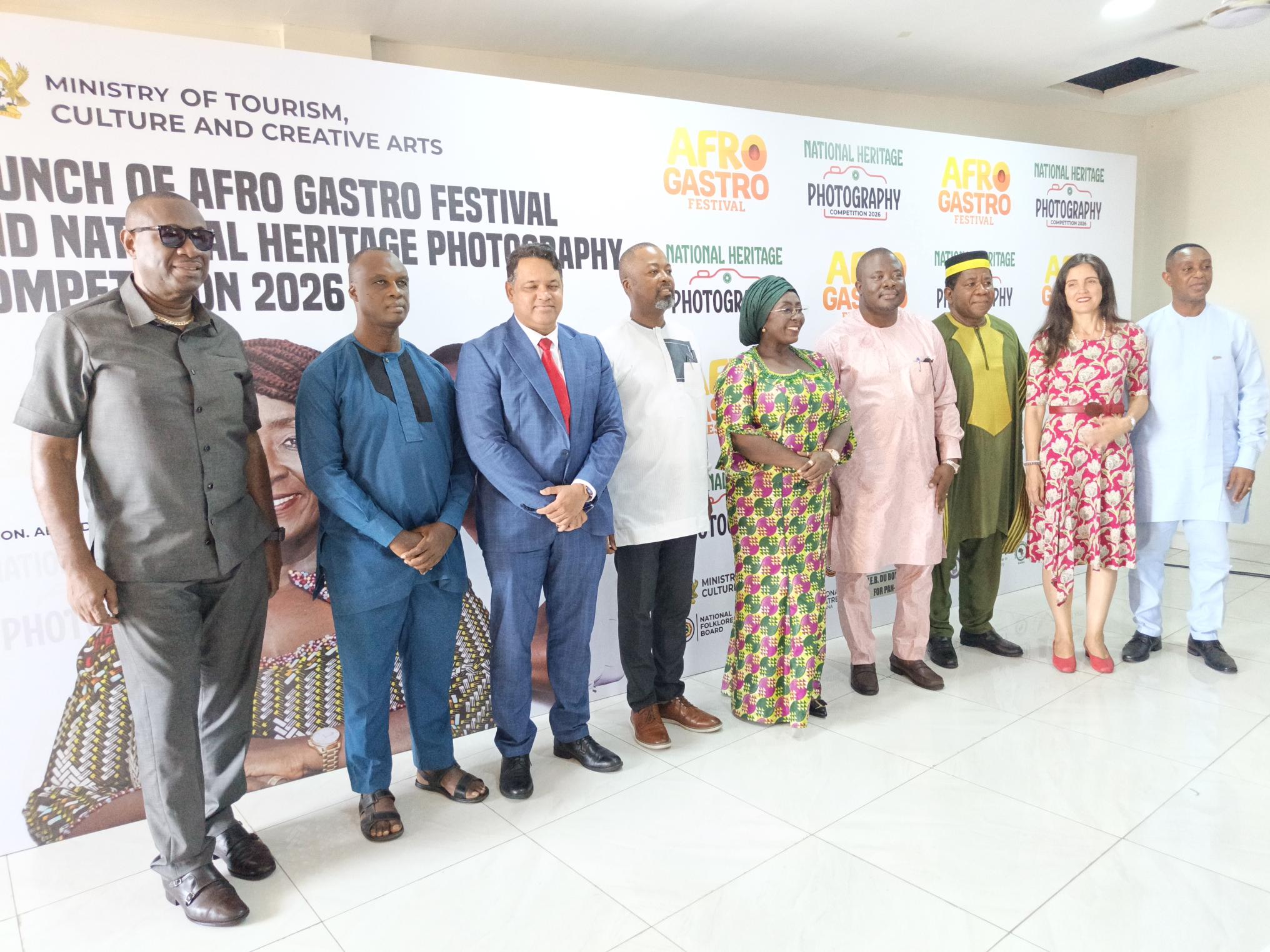
Ghana is strengthening its push to position culture and creative industries as key drivers of tourism and economic development with the launch of the 2026 National Heritage Photo Competition and the Afro-Gastro Festival under the Black Star Experience initiative.
Launching the programmes in Accra, Minister for Tourism, Culture and Creative Arts, Madam Abla Dzifa Gomashie, described the initiatives as strategic platforms for preserving Ghana’s heritage, empowering young creatives and promoting African cultural identity on the global stage.
According to the Minister, the two programmes are designed to showcase Ghana’s rich cultural assets while creating opportunities for youth participation, cultural exchange and economic growth through tourism, the creative arts and gastronomy.
The National Heritage Photo Competition, which debuted successfully last year, returns in 2026 with a renewed focus on encouraging young people to document and celebrate Ghana’s diverse cultural heritage through photography.
Madam Gomashie noted that the maiden edition attracted impressive entries from across the country, capturing festivals, traditional crafts, architecture, landscapes and everyday cultural experiences.
She praised the quality of submissions and highlighted the winning photograph by Caleb Nii Vanderpuye, which captured the historic meeting between the Asantehene, Otumfuo Osei Tutu II, and the Ga Mantse, Nii Tackie Teiko Tsuru II.
The image was widely celebrated for symbolising unity, cultural continuity and national identity.
This year’s competition, themed “Promoting Creativity and Heritage Through the Eyes of the Youth,” is open to participants aged 25 years and below and seeks to inspire a new generation of cultural storytellers and heritage ambassadors.
Alongside the photography competition, the Afro-Gastro Festival aims to spotlight Africa’s culinary heritage as both a cultural asset and an economic opportunity.
The festival will bring together chefs, food innovators, traditional cooks, historians, nutritionists, entrepreneurs and cultural experts from across the continent to showcase indigenous ingredients, traditional recipes and emerging food innovations.
Madam Gomashie said the initiative forms part of broader efforts to position Ghana as a leading destination for culinary tourism while promoting indigenous food systems and cultural diplomacy.
She revealed that the Ministry is working closely with the African Union Development Agency and the UNESCO to expand the reach and impact of the festival.
The event will focus on themes including food heritage, preventive health, agribusiness, youth innovation and sustainable tourism, while creating stronger connections between agriculture, hospitality and the creative economy.
Speaking at the launch, Mr. Symerre Grey-Johnson, Director of Human Capital and Institutional Development at the African Union Development Agency, underscored the growing economic importance of Africa’s creative and cultural industries.
He said sectors such as fashion, music, film, gastronomy, sports, beauty and the arts have enormous potential to create jobs, particularly for young people and women, while boosting trade, innovation and entrepreneurship.
According to him, food remains one of Africa’s most powerful cultural expressions, preserving history and indigenous knowledge while offering significant opportunities for economic expansion through tourism, manufacturing, branding and exports.
Mr. Grey-Johnson expressed confidence that the Afro-Gastro Festival would help transform African cuisine from a cultural treasure into a globally competitive economic sector.
He also disclosed that discussions are underway within the African Union framework to elevate gastronomy and African cuisine as strategic components of the continent’s development agenda, strengthening storytelling, tourism promotion and cultural branding across Africa.
The launch of the two initiatives signals Ghana’s growing ambition to leverage its cultural heritage, creative talent and culinary traditions not only for preservation purposes but also as tools for economic transformation, youth empowerment and international engagement.