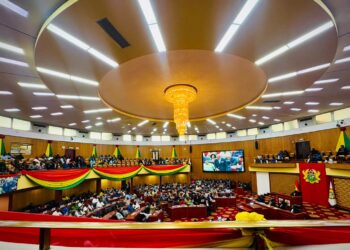
Ghana has initiated steps to endorse the Political Declaration on Strengthening the Protection of Civilians from the Use of Explosive Weapons in Populated Areas (EWIPA), signalling a stronger commitment to civilian safety and responsible arms control.
Speaking at the opening of a two-day Africa Regional Workshop in Accra, Ebenezer Okletey Terlabi said the government had already triggered the process to formally endorse the declaration.
According to him, the move reflects Ghana’s longstanding support for peace, multilateralism and the protection of civilians during conflict.
Although the EWIPA declaration is not legally binding, Mr Terlabi said it carries significant political and moral importance, particularly at a time when civilians continue to suffer in conflicts across places such as Gaza, Sudan, Ukraine and Myanmar.
“The consequences do not end with an immediate blast but linger on as entire generations are scarred by injuries, deaths, displacement and trauma,” he said.
The declaration, adopted in Dublin in 2022, encourages countries to avoid the use of explosive weapons with wide-area effects in populated areas and to strengthen support for victims, humanitarian access and data collection.
Mr Terlabi noted that Ghana’s review of its draft National Arms Bill and National Control List also demonstrates the country’s efforts to improve regulations related to arms and civilian protection.
Currently, 91 countries have endorsed the declaration, including 14 African states, with Nigeria being the latest to join.
Jurgen Heissel said the declaration offers countries a practical framework to reduce civilian harm and improve protection measures.
Meanwhile, Adam Bona urged African countries to take a more active role in shaping global standards on civilian protection.
He stressed that although Africa may not face the same scale of conflict seen elsewhere, the continent is not immune to the effects of explosive weapons.
Laura Boillot also warned that the use of explosive weapons in towns and cities causes predictable and preventable harm to civilians.
The workshop, hosted by Ghana and Austria in partnership with Article 36 and Foundation for Security and Development in Africa, is expected to explore ways to strengthen victim support, improve military doctrine and enhance regional cooperation on civilian protection.