
















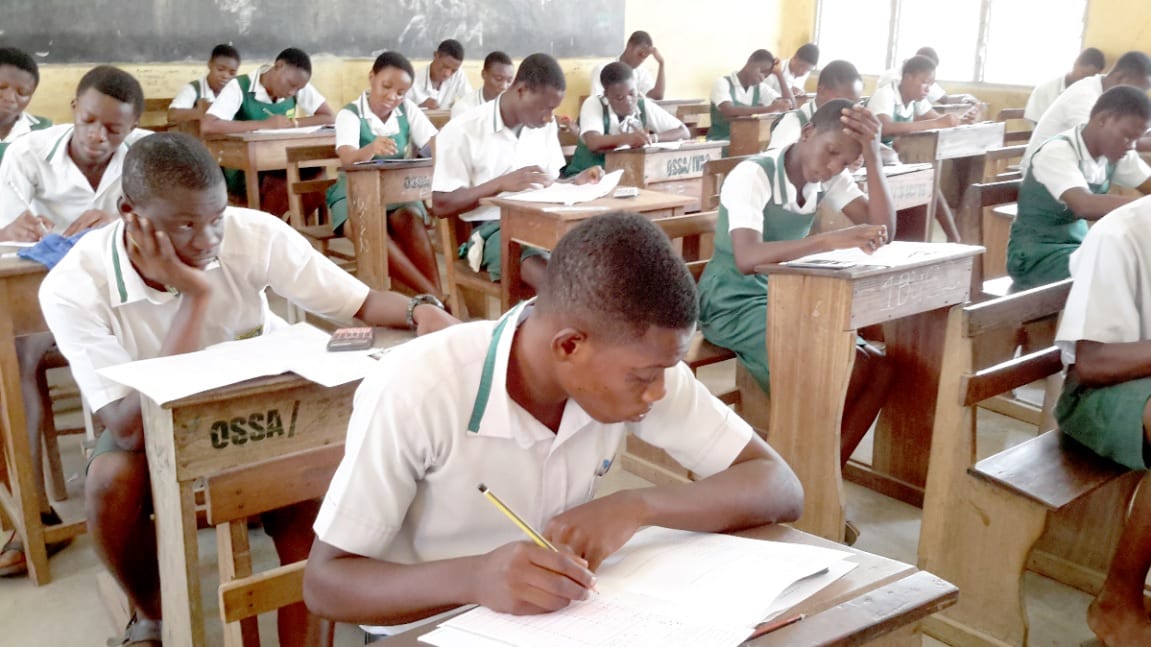
Ghana is set to rejoin its West African neighbours for the 2026 May–June West African Senior School Certificate Examination (WASSCE), marking a return to the regional examination structure after five years of operating independently.
A total of 473,658 final-year senior high school students from Ghana will sit the examination alongside candidates from Liberia, The Gambia, Nigeria, and Sierra Leone, under the coordination of the West African Examinations Council.
The move follows the suspension of the joint examination system during the COVID-19 pandemic, which led Ghana to administer a localised version of the WASSCE in recent years.
According to John Kapi, the return simply means that all member countries will now write the examination at the same time under a harmonised timetable.
He emphasised that the examination remains international in nature, with all member countries involved in key processes such as question setting, moderation, marking, and grading.
The Ghanaian candidates—comprising 248,461 males and 225,197 females from 1,020 schools—represent a 2.58 per cent increase compared to last year’s figure.
Mr Kapi explained that the regional collaboration extends beyond the examination itself to include joint panels that determine marking schemes and grade boundaries, ensuring uniform standards across participating countries.
He noted that this coordinated system also supports international benchmarking and competition among candidates, including excellence awards.
As Ghana returns to the shared system, WAEC has intensified security arrangements to safeguard the integrity of the examination process.
These include restricted access to printing facilities, continuous surveillance through CCTV, and the deployment of police and national security personnel at key stages, from printing to distribution and storage of examination materials.
Additional anti-malpractice measures, such as the serialisation of question papers, have also been introduced to minimise cheating.
Mr Kapi called on stakeholders—including teachers, students, parents, and community leaders—to support efforts to maintain the credibility of the examination, warning that malpractice could have long-term consequences for national development.
Ghana’s return to the regional WASSCE framework is expected to strengthen standardisation, restore international comparability of results, and reinforce collaboration among West African education systems.






