
















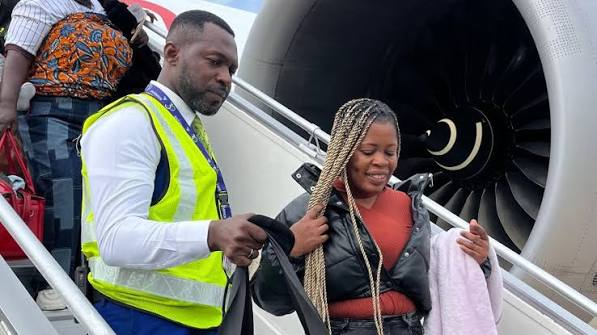
The government has spent GH¢49.72 million to evacuate and support the reintegration of 1,900 Ghanaians who returned from South Africa following renewed xenophobic attacks against African migrants.
Foreign Affairs Minister Samuel Okudzeto Ablakwa disclosed that GH¢38.84 million of the expenditure covered chartered flights, air tickets, ground transportation, feeding, accommodation and medical care for the returnees.
A further GH¢10.80 million was allocated to reintegration assistance and transportation allowances, while GH¢84,274 was used to repatriate the mortal remains of two Ghanaians who died during the unrest.
The expenditure followed a government-led evacuation programme implemented in response to reports of attacks, harassment, intimidation, looting and destruction of property targeting African migrants in South Africa.
Mr Ablakwa said the second phase of the exercise had been successfully completed, with approximately 1,000 Ghanaians who voluntarily registered to return brought back to the country.
This followed an earlier evacuation conducted in May and June, which returned 979 Ghanaians in three batches, bringing the total number of evacuees to 1,900.
Beyond bringing the affected citizens home, the government provided a package of reintegration assistance intended to help the returnees rebuild their lives after the difficult experience.
The support included financial assistance, transportation allowances, medical and psychosocial support, free registration for health insurance and ongoing assistance to connect returnees to employment opportunities.
The Foreign Affairs Minister said the scale of the intervention reflected the government’s commitment to protecting Ghanaians facing threats to their safety outside the country.
“We achieved this together as Ghanaians. Our message is clear: we value the lives of Ghanaians everywhere in the world, and no Ghanaian will be abandoned in harm’s way,” he said.
The evacuation became necessary after reports of renewed xenophobic violence, particularly in Durban and other commercial centres, raised concerns over the safety of Ghanaian nationals and other African migrants.
Mr Ablakwa also expressed condolences to the families of four Ghanaians who lost their lives during the unrest.
The government’s response, he said, extended beyond emergency evacuation to providing returning citizens with support to facilitate their reintegration into communities and the local economy.
The intervention therefore involved not only the cost of transporting the affected Ghanaians to safety but also measures aimed at addressing their immediate welfare and supporting their transition back into Ghana.






