
















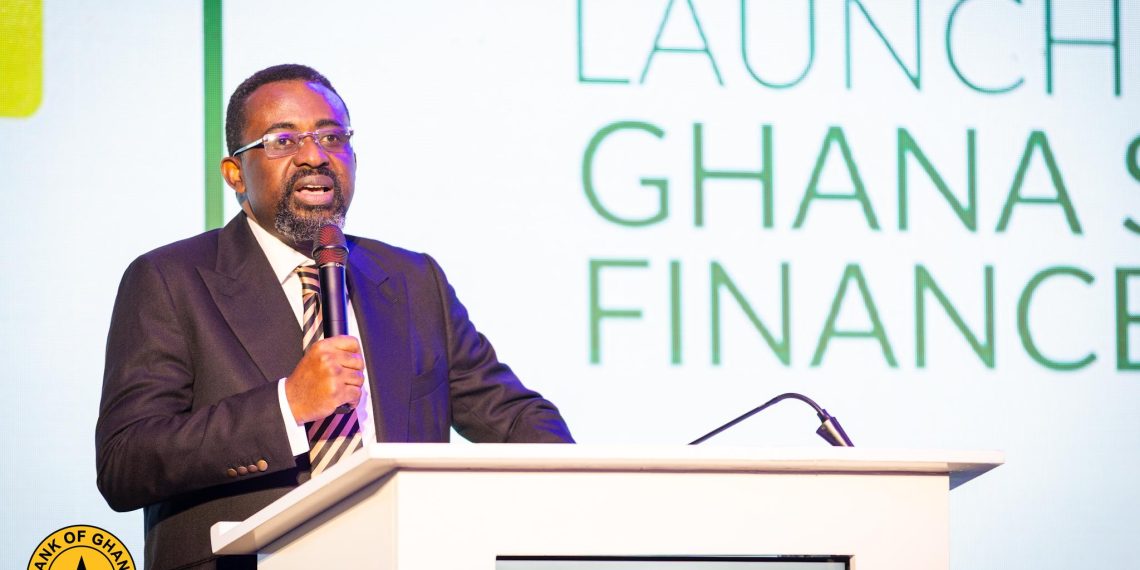
Ghana’s banking industry has achieved an average compliance rate of 73 percent with the country’s Sustainable Banking Principles, reflecting growing integration of environmental, social and governance (ESG) standards into banking operations.
The Governor of the Bank of Ghana, Dr Johnson Pandit Asiama, announced the milestone at the launch of the Sustainable Finance Roadmap in Accra, describing it as a significant achievement in the country’s decade-long drive to build a more resilient and sustainable financial sector.
He said the compliance level, recorded as of September 2025, demonstrated the steady progress made since the introduction of a standardised assessment framework in 2021 with support from the International Finance Corporation (IFC) and the Swiss Secretariat for Economic Affairs (SECO).
“In 2021, with the support of the International Finance Corporation and the Swiss Secretariat for Economic Affairs, we built a standardised framework to measure compliance, and that compliance has risen steadily, reaching an industry average of 73 per cent as at September 2025,” Dr Asiama stated.
He explained that Ghana’s sustainable banking journey began in 2015 with the formation of a multi-stakeholder committee comprising the Bank of Ghana, the Ghana Association of Banks and the Environmental Protection Agency.
The initiative later led to the development of the Sustainable Banking Principles in 2019, providing banks with guidelines to manage environmental and social risks, promote green investments and align financial activities with Ghana’s sustainable development agenda.
According to Dr Asiama, all 23 commercial banks operating in the country voluntarily committed to implementing the framework by integrating sustainability into their governance structures, risk management systems and business strategies.
He said the Bank of Ghana further strengthened the agenda in 2024 by introducing a four-year Strategic Plan on Sustainability and Climate-Related Risks (2024–2028) to help financial institutions better identify and manage climate-related financial risks.
The Governor noted that the newly launched Sustainable Finance Roadmap would enhance coordination among regulators in the banking, insurance, pensions and capital markets sectors, creating a unified national approach to sustainable finance.
He stressed that sustainability had become a strategic business priority rather than merely a regulatory requirement, positioning Ghana’s financial sector to attract green investment, support climate resilience and promote long-term economic growth.






