
















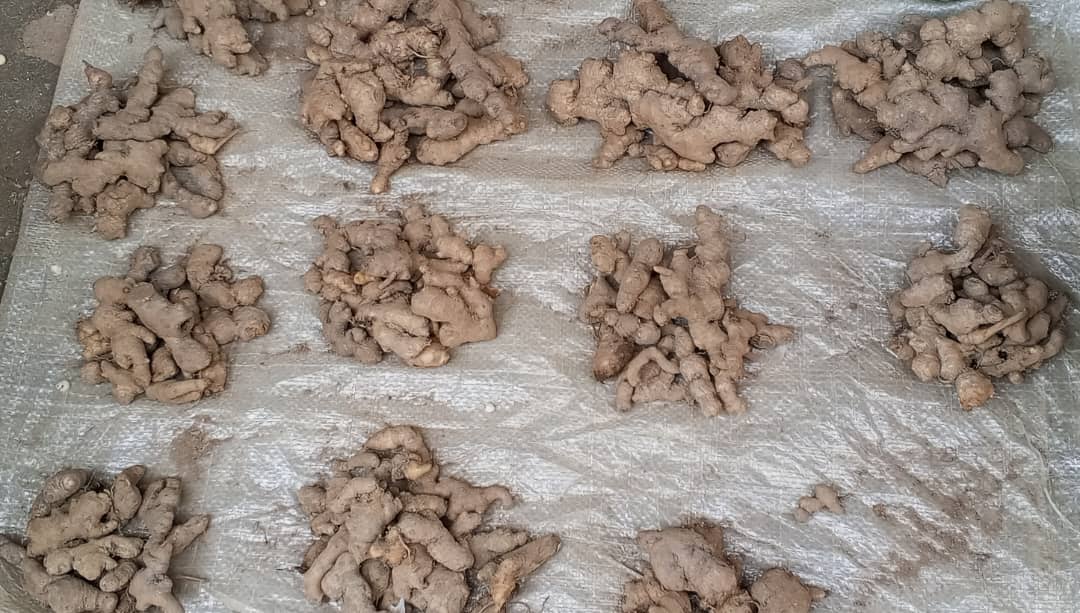
A sharp decline in ginger production in the Kadjebi District of the Oti Region is pushing prices to record levels, leaving traders, farmers and consumers struggling with the economic impact of the shortage.
At the Kadjebi Market, traders say the price of a bag of ginger has climbed to about GH¢5,000, significantly squeezing profit margins and making the commodity increasingly unaffordable for many buyers.
According to traders, the price surge is linked to a fungal disease that ravaged ginger farms in the district several years ago, drastically reducing output and disrupting the area’s once-thriving ginger industry.
Ms Gifty Amegbletor, a trader from Bisease, said rising wholesale prices have made it difficult for traders to recover their investment, especially as customers resist paying higher retail prices.
She explained that while transport and operating costs continue to rise, sales volumes have declined because consumers are purchasing smaller quantities than before.
Another trader, Madam Akosua Nyavor, noted that demand for ginger remains strong due to its widespread use in cooking and traditional remedies, but high prices have weakened patronage and reduced incomes for market women.
Farmers say the production challenges extend beyond current market conditions. Mr James Agyemang, a farmer from Okanta, revealed that many growers abandoned ginger cultivation after suffering substantial losses during the disease outbreak.
According to him, fears of another outbreak have discouraged young farmers from returning to the sector, with many opting to cultivate alternative crops perceived to be less risky.
He warned that the disease continues to threaten production and called on the Ministry of Food and Agriculture and research institutions to provide disease-resistant planting materials and sustainable solutions to help revive the industry.
Consumers have also expressed concern over the rising cost of ginger, arguing that the commodity remains an essential household ingredient and should be made more affordable through increased production.
Despite the challenges, traders and farmers remain hopeful that government support, improved disease management and renewed investment in ginger farming will help restore production levels and stabilise prices in the coming years.
The current situation traces back to a devastating disease outbreak that affected ginger farms across the district, causing widespread crop losses and disrupting livelihoods. Agricultural authorities continue to investigate and seek long-term solutions to protect one of the area’s key cash crops.






