Girls participating in the national Girls in Information and Communication Technology (ICT) initiative have been challenged to move beyond acquiring digital skills and use technology to develop practical solutions to challenges confronting society.
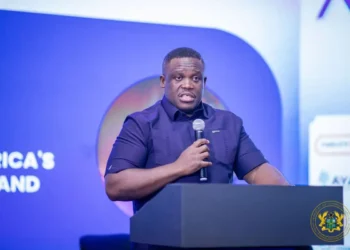
The Minister of Communication, Digital Technology and Innovation, Samuel Nartey George, said the true impact of the initiative would be measured by the ability of its participants to transform the skills acquired into innovations that improve lives and contribute to national development.
He made the call in Accra at the opening of a five-day national Girls in ICT initiative, which brought together 50 participants each from the Volta and Upper West regions.
Held under the theme, “AI for Development: Girls Shaping the Digital Future,” the programme seeks to equip young girls with skills and inspiration to participate more actively in Ghana’s rapidly evolving digital economy.
Mr George said empowering more girls to pursue ICT-related fields would help bridge the gender gap in areas such as cybersecurity, artificial intelligence, software engineering and data science.
He stressed that digitally empowered girls could become a force for transforming communities and strengthening Ghana’s competitiveness in the global digital economy.
“Through this initiative, we seek to give young girls the confidence, knowledge and inspiration to become the next generation of innovators, engineers, developers and digital leaders,” he said.
The Minister also encouraged the participants to enrol in the One Million Coders Programme to deepen their digital skills and broaden their opportunities in technology.
He urged the girls to believe in their abilities and approach their training with discipline and courage as they undertake the various ICT courses.
The Director-General of the Ghana-India Kofi Annan Centre of Excellence in ICT, Dr Collins Afari Yeboah, said the focus on artificial intelligence was timely given the growing influence of technology on everyday life.
He challenged the participants to position themselves as creators, innovators and problem-solvers while ensuring that their use and development of technology remained ethical and responsible.
Dr Yeboah cautioned that issues including privacy, cybersecurity, misinformation, fairness and bias must be considered when developing technological solutions, particularly those involving artificial intelligence.
For his part, the Head of Projects and Technology Services at CWG Ghana, Oluwaseun Layade, said Ghana’s digital transformation would be accelerated when more girls were encouraged to pursue science, technology, engineering and mathematics education and careers.
He urged the participants to maximise the opportunities presented by the initiative, reminding them that the knowledge and skills acquired could influence both their individual futures and Ghana’s development.
The programme therefore seeks not only to increase girls’ participation in ICT but also to equip them with the confidence and capacity to become active contributors to Ghana’s digital future.