
















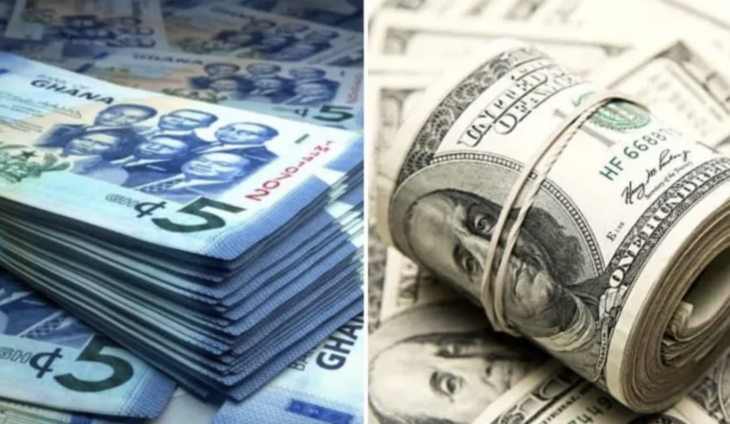
The Ghana cedi began the week on a fragile footing, reflecting the ripple effects of broader global economic shifts, particularly the recent cooling of investor confidence in US assets.
Despite showing signs of strength last week, the local currency slipped slightly on the retail market, exchanging at around GH¢16.00 to the US dollar, marking a 2.36% year-to-date depreciation. The reversal has puzzled some market watchers, especially after the cedi’s earlier gains against the dollar, supported by a weakening US Dollar Index (DXY).
The US currency has taken a hit recently due to fresh tariff impositions by the Trump administration, which analysts say are dampening investor appetite for dollar-backed assets. The DXY recorded a 197.81-point week-on-week drop, closing at 302.02 points year-to-date—a signal of waning confidence in the world’s most dominant reserve currency.
Yet, instead of capitalizing on the dollar’s weakness, the cedi saw renewed pressure. Market observers believe this could be due to residual demand pressures in Ghana’s domestic forex market or lingering uncertainties among businesses and importers.
That said, analysts remain cautiously optimistic. Many expect the cedi to rebound this week if the dollar index continues to slide and risk sentiment further tilts toward emerging markets.
To support the local currency and ensure forex availability, the Bank of Ghana has published its second-quarter auction calendar, targeting the sale of US$120 million to Bulk Oil Distribution Companies. This is expected to ease demand-side pressures and stabilize the cedi in the short term.
Research analysts at Databank anticipate that these strategic interventions, coupled with shifting global investor preferences, will help anchor the cedi’s performance going forward.
Last week, the local currency gained 0.16% week-on-week against the dollar, ending at a mid-rate of GH¢15.78, though it lost ground against the British pound (-0.74%) and euro (-0.59%), as investors pivoted toward European and British assets in the wake of dollar weakness.
The volatility underscores the delicate balancing act facing Ghana’s economic managers, who must navigate both external market turbulence and domestic structural pressures in preserving currency stability.






