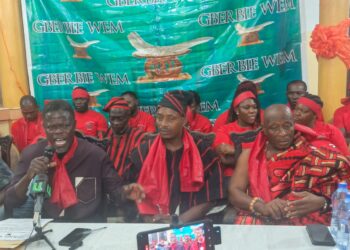
In a powerful demonstration of advocacy and leadership, members of the Students with Disabilities Association of Ho Technical University (HTU) have urged regional authorities to prioritize accessibility and equal opportunities for students with disabilities.
Led by their President, Yorm Agbogbo, the student delegation met with Volta Regional Minister, Mr. James Gunu, at the Regional Coordinating Council on Wednesday, aiming to spotlight the systemic challenges they face and push for more inclusive governance and development planning.
The conversation went beyond mere student grievances—it was a broader call for the integration of disability inclusion into regional policy, education infrastructure, and resource distribution. The students painted a clear picture of their daily struggles: inaccessible lecture halls, lack of assistive technologies, minimal financial support, and widespread social marginalization.
“This is not about charity; it’s about rights,” said Agbogbo. “We want to be seen, heard, and factored into decision-making processes that affect our lives and education.”
The meeting forms part of the association’s proactive outreach campaign to engage key actors in regional and educational leadership, aiming to ensure that inclusion for persons with disabilities is not an afterthought but a fundamental consideration in policy planning.
Mr. Gunu, moved by the students’ courage and clarity, applauded their bold engagement and reaffirmed his commitment to advancing disability rights in the region. “Your advocacy is a wake-up call for all of us in leadership,” he stated. “You are not asking for favours—you are demanding fairness, and that’s something we must all support.”
The Regional Minister highlighted ongoing efforts such as accessibility audits of public buildings, advocacy for disability representation in local governance, and steps to integrate disability issues into district development frameworks. He assured the students that their concerns would be elevated to national platforms.
Gunu also used the occasion to challenge educational institutions like HTU, civil society groups, and the private sector to do more in promoting inclusive education and social equity.
“An inclusive society requires all of us—government, academia, businesses, and communities—to work hand in hand. It’s not the responsibility of one institution alone,” he said.
The HTU students left the meeting with renewed hope and a stronger sense of validation, vowing to continue advocating until all students, regardless of ability, can thrive in safe, inclusive, and empowering learning environments.
Their visit signals a growing movement of young people with disabilities taking agency and shaping the narrative around accessibility, equity, and their rightful place in Ghana’s development journey.