The Integrated Social Development Centre (ISODEC) has raised strong concerns over government’s decision to pursue a new Policy Coordination Instrument (PCI) arrangement with the International Monetary Fund (IMF), warning that the move could undermine Ghana’s economic sovereignty.
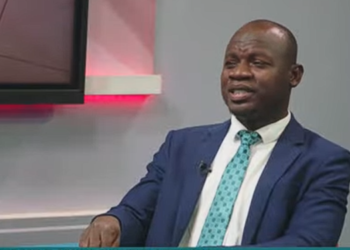
Speaking on The Point of View on Monday, economist at ISODEC, Adamu Abile argued that Ghana’s recent economic stabilisation was driven largely by local policy measures rather than the IMF-backed bailout programme.
According to him, initiatives such as gold reserve accumulation and improved foreign exchange management contributed more significantly to stabilising the cedi and restoring confidence in the economy than the IMF’s $3 billion Extended Credit Facility arrangement.
“It is not necessarily the IMF programme that brought us here,” Dr Abile stated.
He maintained that Ghana’s repeated dependence on IMF support reflected deeper structural weaknesses and excessive reliance on external economic direction.
The economist criticised arguments that the proposed PCI arrangement would enhance investor confidence and strengthen Ghana’s credibility on international financial markets.
Instead, he described the move as a continuation of what he called the country’s overdependence on borrowing.
“When you talk about giving us policy credibility so that we have market confidence to go back and borrow, ISODEC has a serious objection to that,” he stressed.
Dr Abile further called for a more resource-driven national development strategy anchored on stronger domestic control over key sectors of the economy, particularly mining and gold resources.
He argued that Ghana possesses the capacity to independently manage its economic affairs without relying heavily on policy guidance from international financial institutions.
“We are trying to outsource our policy sovereignty to Washington,” he warned.
Government officials, however, have defended the proposed PCI arrangement, insisting that it is not another bailout programme but rather a technical and monitoring framework designed to maintain fiscal discipline and prevent future economic instability after Ghana exits its current IMF support programme.
The debate over the PCI arrangement comes as Ghana prepares to conclude its ongoing IMF Extended Credit Facility programme while seeking measures to sustain economic recovery, stabilise inflation, and strengthen investor confidence.