
















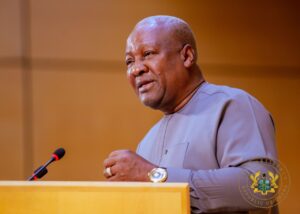
President John Dramani Mahama has turned his attention to infrastructure and agricultural development in the Ahafo Region as he begins a two-day working visit to assess ongoing projects and engage communities on the government’s development agenda.
The visit, being undertaken as part of his Resetting Ghana tour, will see the President inspect selected projects, receive updates on their implementation and interact with traditional leaders and residents on local economic priorities.
A major highlight of the tour is the inspection of the Tepa–Goaso road project, which is being executed under the government’s Big Push Programme, an infrastructure initiative intended to improve road connectivity and support economic activities.
President Mahama is also expected to visit the Ntontroso Bridge, which connects Acherensua, an important food-producing area in the region. The inspection is expected to highlight the role of transport infrastructure in facilitating the movement of agricultural produce from farming communities to markets.
Another key stop on the itinerary is a poultry, meat and feed processing facility at Bechem in the Tano South Municipality, reflecting the tour’s emphasis on agriculture, agro-processing and the expansion of local productive capacity.
The facility is among the projects expected to draw attention to the importance of strengthening domestic food production and processing as part of efforts to stimulate economic activity and create opportunities within the region.
Beyond project inspections, the President’s visit is intended to provide an opportunity for direct engagement with traditional authorities and residents, allowing communities to raise development concerns and discuss government policies affecting their livelihoods.
The two-day tour will conclude on Saturday, October 10, with a town hall meeting at the Victory Centre Assemblies of God Church in Goaso.
The meeting is expected to provide a platform for President Mahama to interact with residents and discuss the government’s development priorities, while receiving feedback on the needs and expectations of communities across the Ahafo Region.






