
















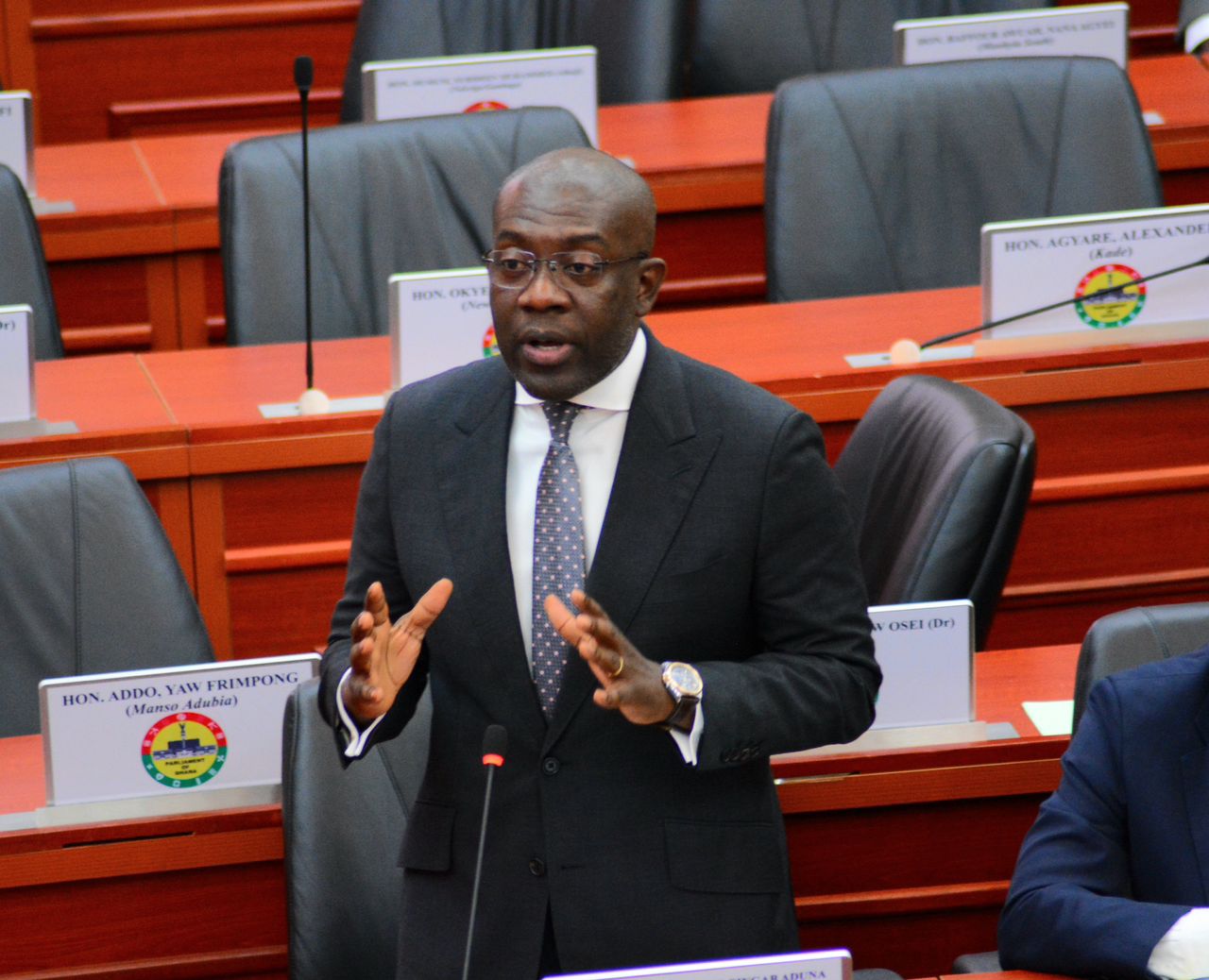
The Minority in Parliament has intensified its criticism of the decision to hold a closed-door engagement with Bank of Ghana (BoG) Governor Dr Johnson Asiama, arguing that there was no basis for excluding the media after the Governor’s written responses had already been made public.
The controversy escalated on Wednesday when the Member of Parliament for Ofoase-Ayirebi and Ranking Member on Parliament’s Economy and Development Committee, Kojo Oppong Nkrumah, released portions of the Governor’s written answers, insisting they had already been published on Parliament’s Order Paper ahead of the Committee of the Whole sitting.
According to Mr Oppong Nkrumah, the responses contained significant disclosures on the Bank of Ghana’s foreign exchange operations and other matters of national economic importance that deserved public scrutiny.
Among the key revelations was the Bank’s confirmation that it had not undertaken direct foreign exchange intervention using Ghana’s international reserves since August 2024.
Instead, Dr Asiama explained that the central bank had relied on the Domestic Gold Purchase Programme (DGPP), under which proceeds from gold purchases are converted into foreign exchange and channelled into the market.
The Governor stated that the framework was designed to replace foreign exchange previously supplied by independent gold exporters before the establishment of GoldBod.
According to the written response, the Bank also confirmed that its current foreign exchange operations are guided by a rule-based framework that allows market forces to determine exchange rates while limiting excessive volatility through transparent spot auctions.
The responses further disclosed that between January 7 and December 31, 2025, the Bank intermediated approximately US$10.359 billion in foreign exchange through the Domestic Gold Purchase Programme.
The central bank stressed that these transactions did not involve the direct use of Ghana’s international reserves but were backed by foreign exchange generated from gold export proceeds.
Mr Oppong Nkrumah questioned why journalists were barred from covering the proceedings when the Governor’s written submissions were already in the public domain.
“These are the answers that the Majority seeks to deny the press an opportunity to report to the people of Ghana about. What is there to hide?” he asked.
He argued that issues relating to foreign exchange management, the stability of the cedi, inflation and the Bank’s financial position were matters of significant public interest that should be openly discussed.
The Minority had also planned to question the Governor on the Bank’s audited financial statements, reported operating losses and other financial disclosures.
However, the caucus suspended its participation in the engagement and staged a walkout after the NDC Majority endorsed the decision to hold the Committee of the Whole sitting behind closed doors.
The Minority maintains that discussions on critical economic matters should be conducted transparently to promote accountability and keep Ghanaians informed about decisions affecting the country’s economy.






