
















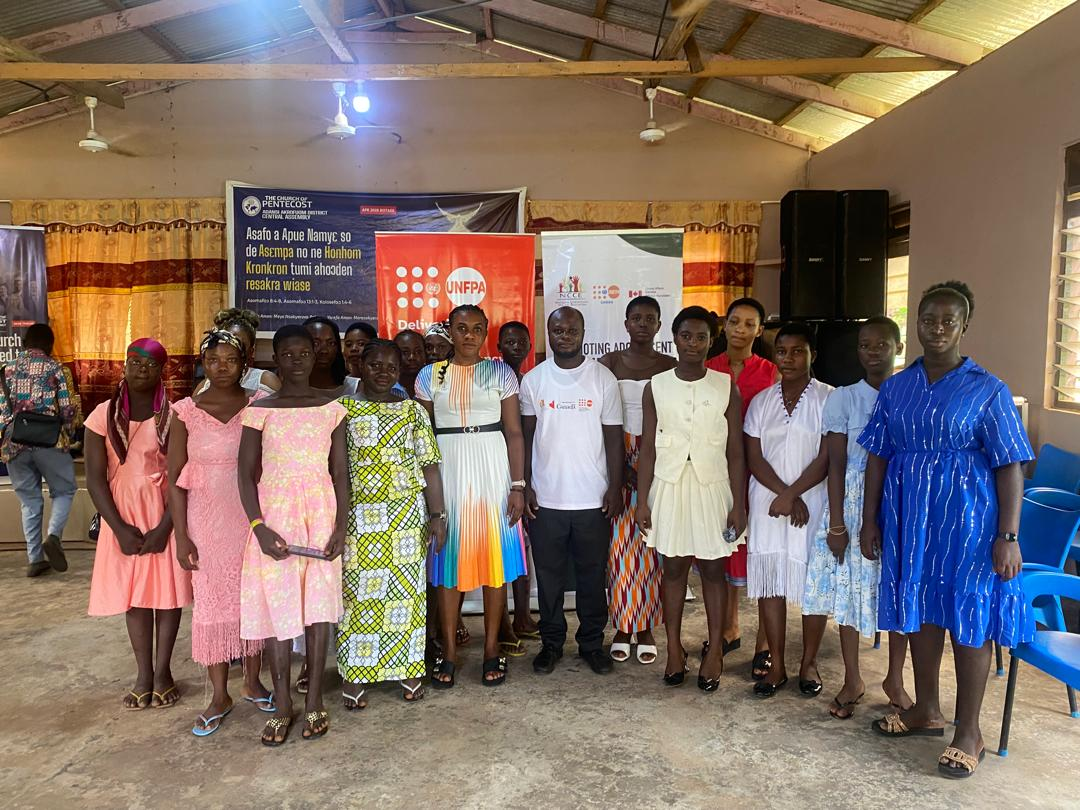
The National Commission for Civic Education (NCCE) is strengthening community-led education on adolescent health and gender-based violence (GBV) in the Ashanti Region by training young people and community members to serve as peer champions.
The initiative, implemented in partnership with the United Nations Population Fund (UNFPA) and funded by Global Affairs Canada, reached 2,709 people through 98 community engagements during the third quarter of 2026.
The beneficiaries, comprising 2,361 females and 348 males, were drawn from faith-based organisations, vocational training groups, community groups and other identifiable community groups across seven districts.
Madam Akua Zakaria, Deputy Regional Director of the NCCE, said the programme was designed to give adolescent girls and young women reliable information on sexual and reproductive health and rights (SRHR), while equipping community members to promote gender equality and prevent violence against women and girls.
She said the initiative had created safe spaces where participants could discuss sensitive health and safety concerns without fear of stigma or discrimination.
According to Madam Zakaria, discussions covered menstrual health and hygiene, family planning, teenage pregnancy, sexually transmitted infections (STIs), child marriage, gender equality, harmful social norms and different forms of GBV.
A key outcome, she said, had been the identification and orientation of peer champions from some participating groups who could continue sharing accurate information with their peers after the formal engagements.
She cited an engagement with seamstress apprentices in the Adansi Asokwa District as an example of how community dialogue could help tackle misinformation surrounding reproductive health.
Madam Zakaria said some participants initially believed that modern contraceptives could cause permanent infertility and other serious health complications.
Through interactive discussions, the facilitators addressed the misconceptions and provided information on family planning, menstrual health and where young people could access youth-friendly health services.
Some of the apprentices subsequently volunteered to become peer champions, allowing the information provided through the programme to reach a wider network of young people.
Madam Zakaria said the approach was important because trusted community members could play a significant role in challenging misinformation and encouraging positive health-seeking behaviour among adolescents.
The engagements also provided platforms for women and girls to discuss incidents of GBV in their communities and learn practical ways of supporting survivors and promoting their safety.
She said the experience demonstrated that established community groups could provide effective entry points for addressing sensitive issues involving adolescent health, human rights and violence prevention.
Madam Zakaria therefore called for sustained investment in community education, including additional educational materials and programme-branded T-shirts to improve the visibility of the initiative and its partners.
The programme was implemented in Adansi Asokwa, Adansi Akrofuom, Asokore Mampong, Atwima Nwabiagya, Kwadaso, Kumasi Metropolitan and Sekyere Central districts.
The NCCE said continued community engagement would be important to ensure that accurate information on adolescent health and rights remains accessible while strengthening local capacity to prevent GBV and promote safer communities.






