
















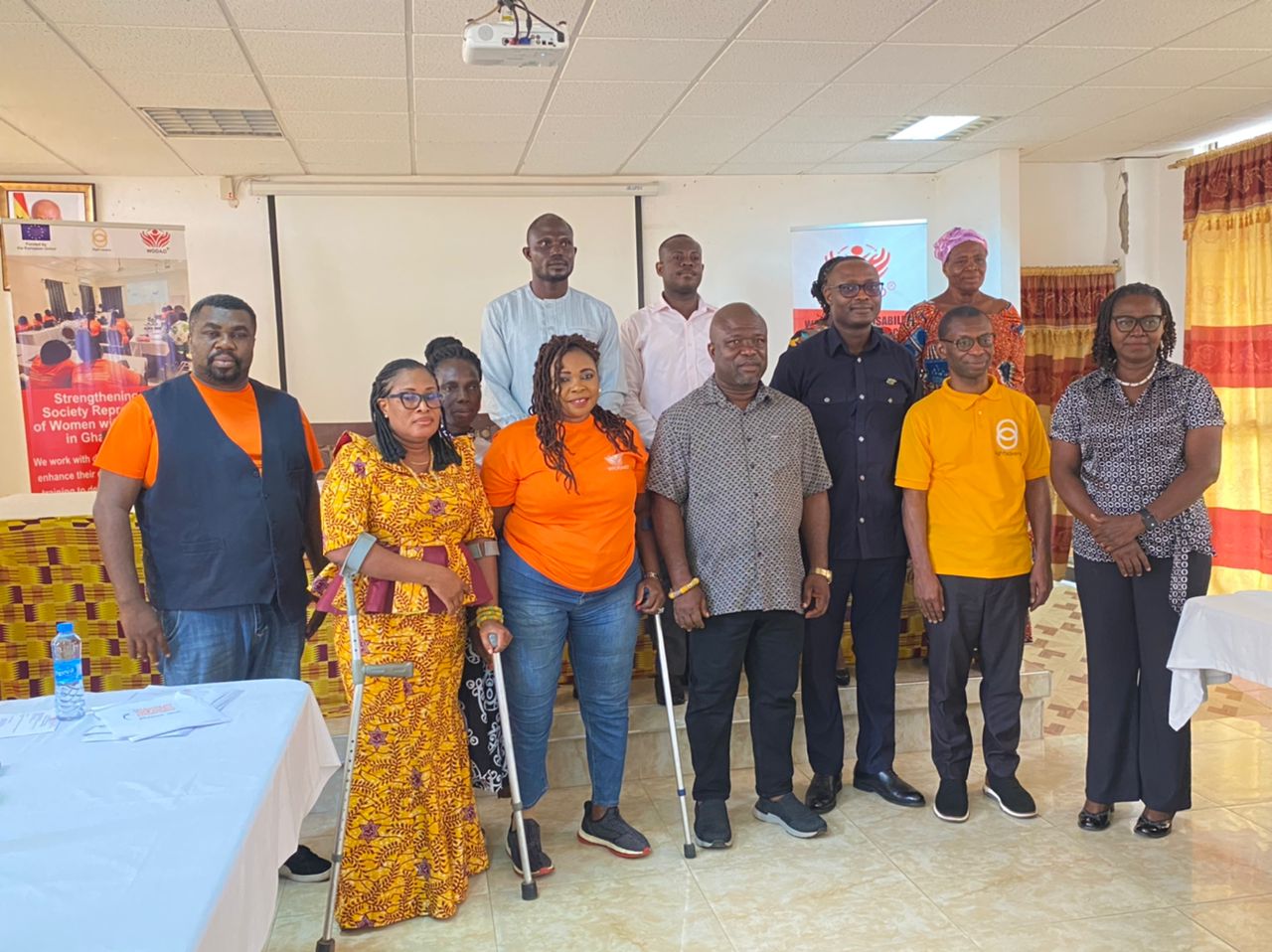
Stigma and discrimination against persons with disabilities (PWDs) are leaving many of them outside the official database in the Asunafo North Municipality, weakening efforts to provide them with adequate government support.
Ms Felicia Serwaa, a disability advocate and member of the Ghana Chamber of Entrepreneurs with Disability in Goaso, said the failure of some families to register relatives with disabilities was creating significant gaps in data needed for effective planning and resource allocation.
She said the situation meant that official figures could fall far short of the actual number of PWDs living in the municipality.
“If the government assumes that the number of people with disabilities in Asunafo North is 500, there may be 1,000 PWDs unaccounted for in their various houses,” she said in an interview with the Ghana News Agency (GNA) at Goaso.
Ms Serwaa explained that the problem became more pronounced whenever funds were released for PWD support, as previously unregistered persons often emerged to access the assistance.
She said this placed additional pressure on already limited resources and reduced the amount available to each beneficiary.
“So, at the end of the day, the money will not be enough to start any business,” she said.
Families urged to end concealment
Ms Serwaa attributed the data gap largely to stigma, saying some parents and families deliberately kept relatives with disabilities away from public view.
She urged families to abandon the practice and support PWDs to register with the Assembly so that their needs could be properly captured in development programmes.
She also called on opinion leaders, Unit Committee members and other community stakeholders to actively support the registration exercise.
“This should be a collective responsibility and not only the work of the Assembly,” she said.
According to her, the Asunafo North Municipal Assembly had created avenues for PWDs to register, while officials and other stakeholders also undertook community outreach activities to identify persons who might have been left out.
She said community leaders were increasingly being involved in efforts to improve the database, with discussions also ongoing on measures to address the deliberate concealment of PWDs because of stigma and discrimination.
Limited funds constrain empowerment
Ms Serwaa also raised concerns about the limited resources available under the Common Fund allocated to PWDs, saying the money was spread across several areas of need.
She explained that the fund was not used exclusively for livelihood empowerment but also supported education, emergency needs and parents or caregivers of bedridden PWDs.
“Regardless of the Free Senior High School policy, some portion of the funds goes into education, and also some portion goes to support parents who take care of some PWDs who are bedridden,” she said.
She noted that the amount eventually available for livelihood support was often too small to enable beneficiaries to establish sustainable businesses.
“The fund has a lot of allocations and so what comes into our hands under the livelihood empowerment programme is meagre to do anything meaningful with it,” she said.
Assembly shifts from cash to equipment
Ms Serwaa said the Assembly had also changed the way livelihood assistance was provided, with cash disbursements increasingly being replaced by equipment and other business inputs.
She explained that beneficiaries were now assessed based on the businesses they intended to establish, after which the Assembly procured the necessary equipment.
Items provided included chest freezers, fufu machines and other tools required for specific businesses.
“Now, they don’t give out cash as most of the PWDs don’t use the money for its intended purpose,” she said.
She added, however, that beneficiaries who received cash assistance were required to provide tangible justification for how the funds were used.
Ms Serwaa said improving the accuracy of the PWD database, tackling stigma and ensuring that limited resources were directed towards the actual population would make the Common Fund more effective.
She therefore urged families to stop hiding persons with disabilities and instead encourage them to register and participate fully in programmes aimed at improving their livelihoods, dignity and independence.






