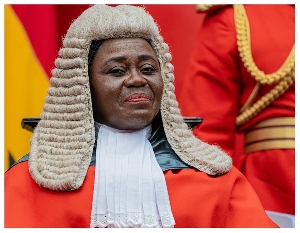
In a decisive 4–1 ruling, Ghana’s Supreme Court has upheld President John Mahama’s suspension of Chief Justice Gertrude Araba Esaaba Sackey Torkornoo and allowed the committee investigating her possible removal to continue its work. The judgment marks a significant ruling on the constitutional powers surrounding the removal of high-ranking judicial officers.
The case was brought by the Centre for Citizenship, Constitutional and Electoral Systems (CenCES), which challenged the legality of the President’s suspension and the formation of the inquiry committee. CenCES argued that the President’s actions violated key constitutional protections of judicial independence, due process, and fair trial rights under the 1992 Constitution.
However, the Court’s majority disagreed, ruling that the President acted within his constitutional mandate under Article 146. The five-member panel, led by Justice Paul Baffoe-Bonnie, found no grounds to invalidate the suspension or halt the ongoing inquiry. Justice Yaw Asare Darko was the lone dissenter, expressing concerns about potential infringements on judicial autonomy.
CenCES had sought to stop the committee’s proceedings, claiming the process lacked a lawfully established prima facie case and that the suspension was arbitrary. They further requested that the Chief Justice be barred from participating in the inquiry to avoid conflicts of interest. The Court rejected all these arguments.
Adding complexity to the situation, another legal challenge has been filed by private citizen Theodore Kofi Atta-Quartey, who is also seeking to restrain the committee’s work via an interlocutory injunction pending the full hearing of his suit. The Supreme Court has since called this case for hearing.
The rulings underscore the evolving debate in Ghana over the balance of power between the executive and judiciary, and the constitutional safeguards that govern the removal of senior judicial officials. With the inquiry continuing, all eyes remain on how the process will unfold amid heightened public and legal scrutiny.