
















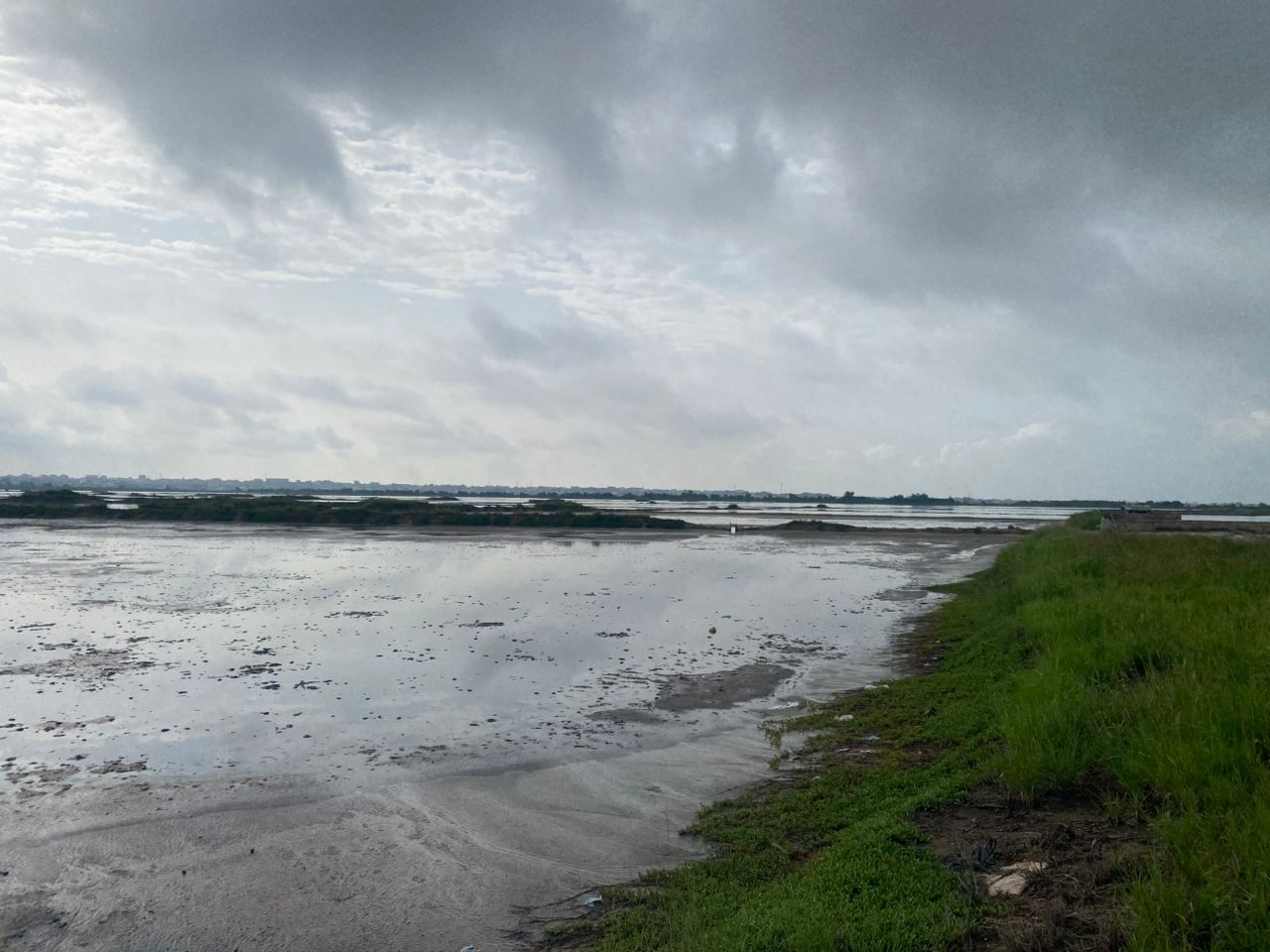
Researchers at the Centre for Biodiversity Conservation Research (CBCR) have sounded the alarm over increasing environmental threats facing the Densu Ramsar Site, warning that recurring flooding and unchecked human encroachment could undermine one of Ghana’s most important wetland ecosystems.
According to the researchers, recent floods caused by heavy rainfall and spillage from the Weija Dam have already damaged critical breeding grounds for waterbirds, raising concerns about the long-term health of biodiversity within the internationally recognised wetland.
The Densu Ramsar Site serves as a key habitat for migratory and resident bird species and plays an important role in supporting ecological balance, flood control and livelihoods for surrounding communities.
Mr. Emmanuel N.A. Taye, a Wetland Ecologist and Ornithologist at CBCR, said the wetland remains a crucial stopover and breeding site for birds along the East Atlantic Flyway, making its conservation significant not only for Ghana but also for global biodiversity efforts.
He explained that the site provides essential feeding, resting and nesting grounds for hundreds of waterbirds each year and warned that continued degradation could have consequences extending beyond the country’s borders.
Researchers monitoring the annual breeding season reported that rising water levels inundated sections of the wetland, destroying several bird nests that were being tracked as part of a long-running conservation programme.
Ms. Pearl Odumang, a Research Assistant at CBCR, disclosed that researchers had recorded multiple nests of Black-winged Stilts and Pratincoles before the flooding occurred, but several were washed away as water levels rose.
She noted that the Densu Ramsar Site typically hosts around 150 Black-winged Stilt nests and approximately 60 Pratincole nests annually, making it one of Ghana’s most important breeding grounds for waterbirds.
According to her, this year’s breeding season had already been affected by delayed rainfall patterns, with the subsequent flooding further disrupting nesting activities and reducing breeding success.
The researchers expressed concern that repeated flooding events could lead to declining bird populations over time, particularly given the wetland’s strategic role within international migratory bird networks.
Beyond flooding, conservationists identified increasing human encroachment as another major threat to the wetland.
Mr. Alfred Ali Nuoh, Chief Technician at CBCR, warned that expanding settlements and illegal developments within the wetland are reducing its natural capacity to absorb and regulate water.
He explained that as the wetland shrinks, surrounding communities become more vulnerable to flooding while biodiversity continues to lose critical habitat.
The researchers have therefore called for urgent intervention from key stakeholders to safeguard the Ramsar Site.
Among the recommendations are stronger enforcement of wetland protection regulations by local authorities, improved coordination in the management of Weija Dam spillages, and infrastructure upgrades to protect important bird breeding areas.
The team also urged residents and visitors to support conservation efforts by complying with environmental regulations and avoiding activities that could damage nesting sites.
According to the researchers, protecting the Densu Ramsar Site is essential not only for preserving biodiversity but also for maintaining the ecosystem services that support nearby communities.
Designated as a wetland of international importance under the Ramsar Convention, the Densu Ramsar Site remains one of Ghana’s most significant conservation areas and continues to be monitored annually as part of efforts to protect its unique wildlife and ecological resources.
Without decisive action, the researchers warn, the combined pressures of flooding, habitat destruction and human encroachment could cause irreversible damage to a wetland that plays a vital role in Ghana’s environmental security.






