
















Ghana’s economy recorded stronger-than-expected growth in the first quarter of 2026, expanding by 6.4 percent and signaling continued recovery across key productive sectors, according to the Ghana Statistical Service (GSS).
The latest figures show a marginal improvement over the 6.2 percent growth recorded in the same period of 2025, reflecting sustained economic resilience despite sector-specific challenges.
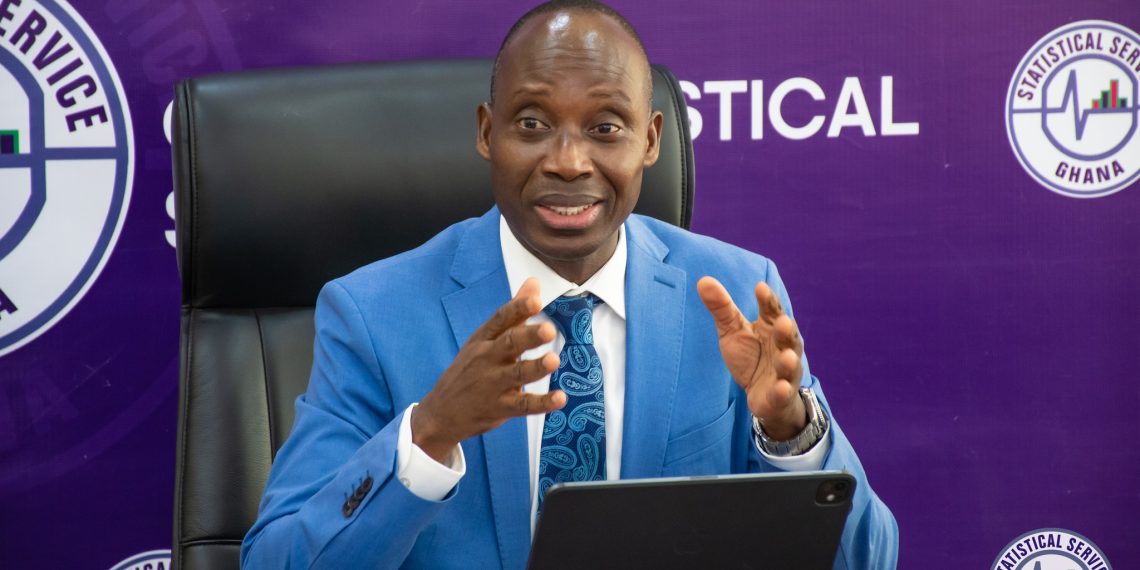
Presenting the data, Government Statistician Dr. Alhassan Iddrisu attributed the performance largely to strong activity in the services sector, which maintained its position as the backbone of the economy.
He explained that non-oil Gross Domestic Product (GDP) also grew by 6.3 percent, indicating that expansion was broadly distributed across multiple sectors rather than being driven solely by petroleum output.
The services sector led overall performance with 7.1 percent growth, supported by exceptional expansion in information and communication services, which surged by 25.2 percent. Transport and storage also recorded solid growth of 13 percent, while trade expanded by 7 percent.
The industrial sector posted a notable rebound, growing by 6.9 percent compared to 4.1 percent in the first quarter of 2025. This improvement was driven mainly by mining and quarrying, which expanded by 10.7 percent, alongside a recovery in oil and gas production, which grew by 7 percent.
Agriculture registered a modest growth of 4 percent. However, overall performance in the sector was affected by a sharp contraction of 18.5 percent in the fishing sub-sector, which dampened broader gains.
Dr. Iddrisu further noted that seasonally adjusted GDP increased by 1.6 percent on a quarter-on-quarter basis, indicating continued momentum in economic activity.
Additional indicators from the Composite Index of Economic Activity (CIEA) showed consistent expansion throughout the quarter, with growth recorded at 6.1 percent in January, 7.7 percent in February, and 5.4 percent in March.
According to the GSS, the sustained growth trend underscores the importance of maintaining macroeconomic stability while accelerating infrastructure development, digital transformation, and private sector-led expansion.
However, the report also highlighted structural weaknesses that require attention, particularly in the fishing industry, accommodation and food services, and water and sewerage sectors, which continue to weigh on overall productivity.
The latest data suggests Ghana’s economy remains on a steady growth path, supported by a diversified mix of services, industrial recovery, and expanding digital activity.






