
















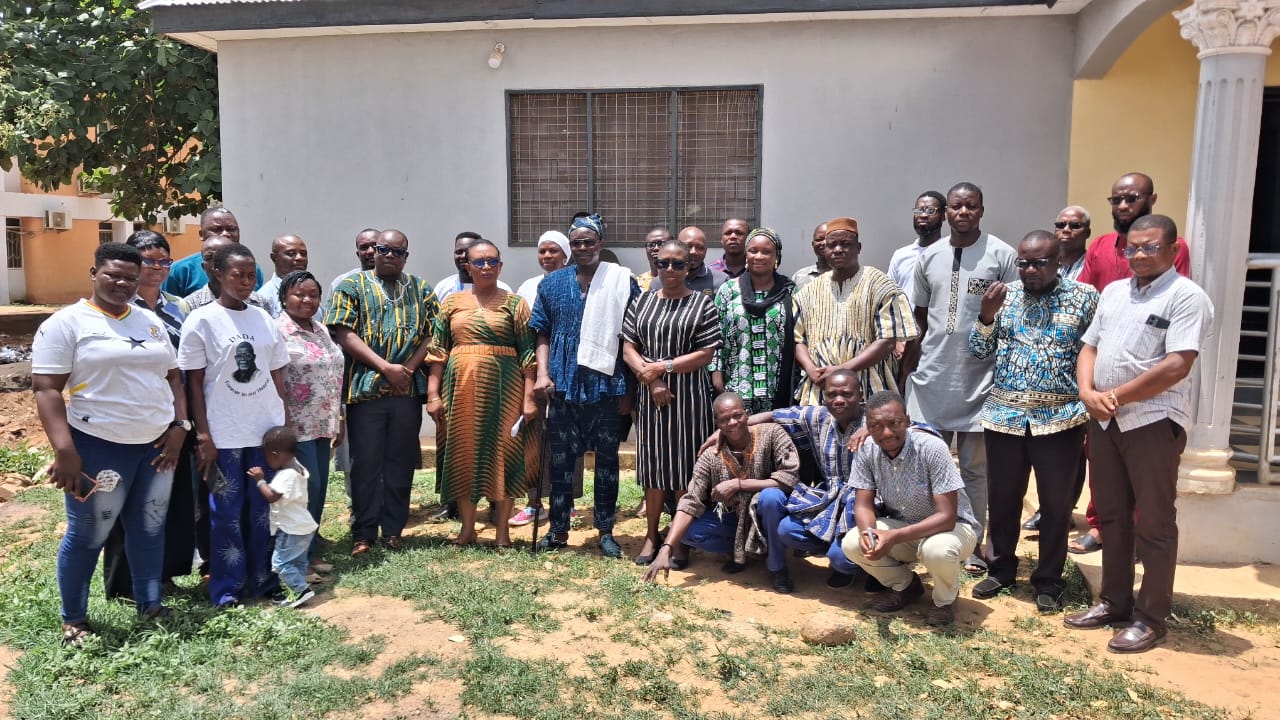
A new livestock health intervention aimed at improving veterinary access, strengthening women-led farming businesses and enhancing rural livelihoods has been launched in Ghana’s Upper East Region.
The project, dubbed “Strengthening One Health Systems and Livelihood Resilience for Women Smallholder Farmers in Ghana,” is being implemented by Meta Foundation-Ghana in the Bongo and Kassena-Nankana West Districts with support from Zoetis through Veterinarians Without Borders (VWB).
The initiative seeks to address key challenges affecting smallholder farmers, including livestock diseases, limited access to veterinary services, weak market linkages and financial constraints that continue to limit productivity and income growth among rural households.
Speaking at the launch in Bongo, Head of Programmes and Partnerships at Meta Foundation-Ghana, Mr David Amozebga, said the project was designed to create stronger connections between animal health, human wellbeing and environmental sustainability.
He explained that the intervention was anchored on the One Health approach, which recognises that the health of people, animals and the environment are closely linked.
“Our goal is to improve farmers’ access to veterinary and extension services, reduce livestock mortality, empower women entrepreneurs to become more profitable and sustainable, and prepare communities to respond to future health, environmental and livelihood challenges,” he said.
Under the project, 20 Community Animal Health Workers (CAHWs) and 20 veterinary professionals will receive training to provide basic animal healthcare services, support disease prevention and improve early detection of livestock diseases in underserved communities.
The initiative is expected to directly benefit about 4,000 farmers and 4,000 students through community education, digital advisory services, financial literacy programmes, strengthened village savings and loans associations and the creation of One Health Clubs in schools.
Mr Amozebga called for collaboration among traditional authorities, government institutions and community leaders to ensure the sustainability of the project beyond its implementation period.
The Country Manager for Ghana at Veterinarians Without Borders, Ms Christiana Kankani Yakubu, said limited access to veterinary services remained a major challenge for many rural communities, making the intervention crucial to improving food security and strengthening livelihoods.
She stressed that effective collaboration among government agencies, development partners and communities was necessary to ensure veterinary support reached farmers in remote areas.
Dr Henry Nii Anang, Upper East Regional Veterinary Director, welcomed the initiative, describing it as a timely intervention that complemented government efforts to decentralise veterinary services.
He noted that the region’s limited number of veterinary professionals made it difficult to effectively monitor and respond to livestock diseases such as Peste des Petits Ruminants (PPR), Newcastle disease and African Swine Fever.
According to him, training Community Animal Health Workers would help bridge the service gap by providing farmers with easier access to basic animal healthcare while strengthening disease surveillance.
“As the Regional Veterinary Directorate, we reaffirm our commitment to supporting initiatives that strengthen veterinary service delivery and enhance collaboration with development partners to build a resilient livestock sector,” Dr Anang said.
The Bongo District Chief Executive, Ms Diana Asoketarige Ayamga, said the project would contribute significantly to women’s empowerment, improve livestock production and educate young people on the importance of maintaining healthy relationships between humans, animals and the environment.
The Bongo District Director of Agriculture, Mr Henry Ayamba, also said the programme would improve access to veterinary services and help farmers increase productivity and incomes.
The organisers expressed the hope that the project would serve as a model for strengthening community-based animal healthcare systems and building resilient agricultural communities across Ghana.






