
















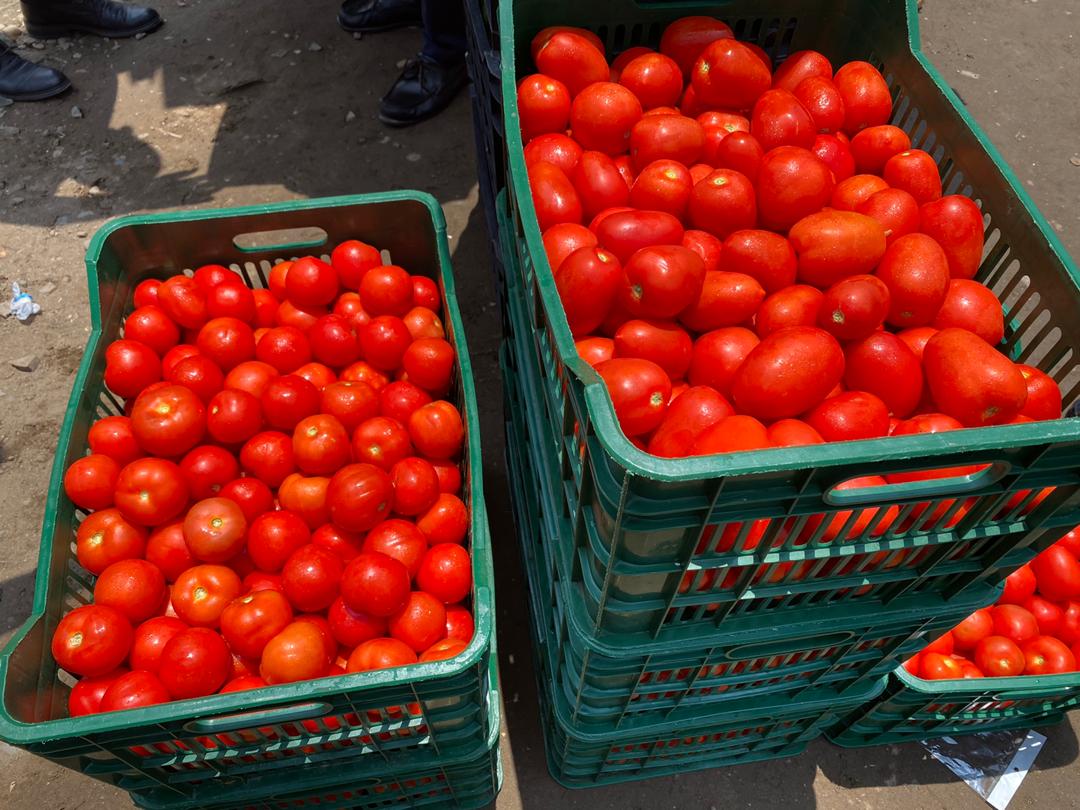
Ghana’s latest inflation figures are masking significant disparities in the prices consumers face at the market, with fresh tomatoes recording a 158.3% year-on-year increase in August 2026 despite food inflation easing to 3.0%.
The Ghana Statistical Service (GSS) said the sharp rise in tomato prices illustrates how the national inflation rate can conceal substantial price movements in individual commodities.
Government Statistician, Dr Alhassan Iddrisu, noted that while some food items became significantly more expensive, others recorded substantial price reductions during the month.
“Fresh Tomatoes more than doubled in price (+158.3%) while Lime fell 33.7%: the overall Y-on-Y inflation of 5.0% hides very different experiences at the market,” he said.
Fresh tomatoes recorded the highest year-on-year price increase among the commodities tracked by the GSS, followed by ginger, which increased by 128.3%.
Shrimps recorded a 67.1% increase, while mango prices rose by 57.7%. Fresh coconut and fresh green pepper also recorded increases of 38.0% and 30.5%, respectively.
At the other end of the scale, lime recorded the largest price decline, falling by 33.7% year-on-year. Maize prices also dropped by 31.3%, while cocoyam leaves, sweet apples, fried fish and pawpaw recorded notable reductions.
On a month-on-month basis, food prices generally declined by 2.5% in August, even though some individual commodities experienced steep increases.
Dr Iddrisu explained that the inflation rate should not be interpreted as the actual price level of goods in the market but as the rate at which prices are changing.
“Inflation measures how fast prices in general are rising or falling, not how high they already are,” he said.
Overall year-on-year inflation, however, increased to 5.0% in August from 4.6% in July, although it remained well below the 11.5% recorded in August 2025.
The increase in headline inflation was driven mainly by non-food items, whose inflation rate rose to 6.8%, compared with 3.0% for food.
According to the GSS, non-food items accounted for 70.9% of total inflation in August, while food contributed 29.1%.
Services also remained a significant source of price pressure, recording inflation of 8.6%, compared with 3.8% for goods.
The data further showed that locally produced goods and services accounted for 86.2% of total inflation, while imported items recorded an inflation rate of 2.2%.
The contrasting movements underline the uneven nature of price changes in the economy, with consumers experiencing significantly different levels of price pressure depending on the goods and services they purchase.






