
















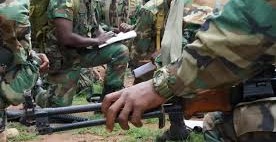
The recent deaths of two young men allegedly tortured while in military custody have reignited national debate over human rights violations and the lack of accountability within Ghana’s security services.
Seven soldiers from the 4th Infantry Battalion (4BN) and one civilian have been charged with murder and conspiracy to commit murder following the tragic events that unfolded in Kumasi on 28 March 2025. The incident has sparked widespread public outrage and calls for reforms in how military personnel interact with civilians.
Key among the accused is Lieutenant Selim Nikoi Neequaye, said to have led the operation. Other officers charged include Lieutenants Emmanuel Abrokwa and Daniel Osae, with four junior-ranked personnel and a civilian driver, Thomas Adjei Mensah, also implicated.
Court proceedings at the Suame District Court revealed chilling details of the victims’ final hours. The deceased—Kwame Adu and Kwabena Sarfo—were allegedly picked up by soldiers over suspicions of stealing a mobile phone. The only known survivor, Christian Obiri Yeboah (aka Kofi Yesu), recounted harrowing scenes of severe beatings at the 4BN barracks before he and the others were dumped in a bush at Danyame.
A distress call from one of the victims alerted family members to their detention, but it was too late. The bodies were discovered by police and pronounced dead at the Komfo Anokye Teaching Hospital.
Despite admitting to detaining the individuals, the accused deny using violence. However, civil society groups and legal experts argue that this incident highlights a systemic failure to uphold the rights of citizens, particularly in cases involving security personnel.
“This is not an isolated case. We’ve seen repeated instances where military personnel act with impunity,” said a spokesperson from the Ghana Center for Democratic Development (CDD).
The case has been adjourned to 22 April 2025, with the suspects remanded into military custody. The Ghana Police Service and military high command have both assured the public of full cooperation in the investigation.
Human rights advocates are demanding transparent prosecution and institutional reforms, warning that failure to act decisively could embolden future abuses.
As Ghana continues to position itself as a beacon of democracy and rule of law in the region, the outcome of this case may serve as a crucial test of the country’s commitment to justice and accountability—even when perpetrators wear uniforms.






