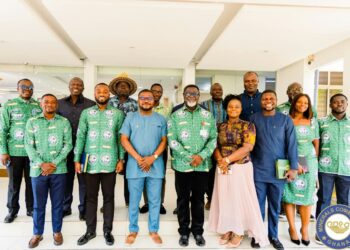
The leadership of the Evangelical Presbyterian Church Ghana has come under scrutiny following allegations that senior officials were involved in the private registration and management of its Prime Natural Mineral Drinking Water Limited.
An open letter by Rev Dr Francis Amaglo, cited by the Ghana News Agency, accused the Church’s Moderator, Right Rev Dr Lt Col Bliss Divine Kofi Agbeko, alongside Rev Daniel Torvinyo, Ms Eyram Wordemekpor, and Lawyer Dick Anyadi, of registering and managing the company in their personal names rather than under Church ownership structures.
The letter also raised concerns about alleged breaches of company law, including failure to file annual returns, weak accounting practices, and possible conflicts of interest involving trustees and directors. It further questioned the governance structure of the company, suggesting overlaps in leadership roles and financial decision-making within the Church’s investment arm.
Rev Dr Amaglo argued that these issues pointed to deeper governance weaknesses and called for stronger oversight of Church-owned commercial ventures through a dedicated investment body, rather than allowing decision-making to remain concentrated in existing committees.
However, the Church has strongly rejected the allegations.
Responding on behalf of the Church, Clerk of the General Assembly, Rev Dr Dzanku, dismissed the claims as unfounded and based on speculation, insisting that no evidence supports assertions of secret salaries or improper financial benefits to the officials in question.
He stated that participation in Church boards does not automatically attract additional remuneration and maintained that all financial processes relating to the company are properly documented and subject to audit controls.
Rev Dr Dzanku further rejected claims that the water company was established without the knowledge of the Church, describing such suggestions as inconsistent with the institution’s documented history.
He urged members of the Church to avoid spreading unverified claims and instead promote unity, stressing that allegations must be supported by verifiable evidence rather than suspicion or interpretation.
The Church maintained that its records, including payroll documents, board resolutions, and audited statements, show no evidence of hidden payments or improper emoluments to the officials under scrutiny.