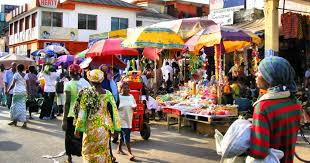
In a significant move that signals a divide within Ghana’s secondhand clothing industry, the leadership of Kantamanto Market has publicly distanced itself from the ongoing strike organized by the Ghana Used Clothing Dealers Association (GUCDA), asserting that the association does not speak for the broader Kantamanto community.
According to a statement issued by the market’s leadership, GUCDA represents primarily large-scale importers of used clothing and not the full spectrum of individuals who sustain the vibrant operations at Kantamanto.
The statement clarified that the strike, which GUCDA claims is in defense of the entire market, lacks the endorsement of Kantamanto’s core workforce—small retailers, kayayei (head porters), tailors, upcyclers, and resellers.
“We reject any suggestion that GUCDA represents our collective voice,” the leadership said. “Their interest does not encompass the daily realities and struggles of those who make this market function.”
The Kantamanto leaders used the opportunity to reaffirm their partnership with The Or Foundation, a nonprofit organization working on sustainable fashion, environmental justice, and economic empowerment in the secondhand clothing sector.
The statement lauded the Foundation’s long-standing efforts, from fire recovery aid to upcycling training and public health campaigns.
Critically, the leadership also defended the widely cited figure that 40% of secondhand clothing entering Ghana ends up as waste—a statistic that GUCDA has tried to discredit as harmful to the industry’s image.
“This is not propaganda. It is our truth,” the leaders emphasized. “Traders are often at the mercy of the bales they receive, many of which contain items that are unsellable due to damage or obsolescence.”
In contrast to GUCDA’s protests, Kantamanto’s leadership stressed that solutions must come from dialogue, collaboration, and transparency—not disruption.
They warned that “any attempt to suppress the voices of market workers or derail constructive partnerships risks undermining the very future of the market.”
Despite recent adversities, including a destructive fire earlier this year, the market remains open and operational. Leaders credited The Or Foundation with providing emergency aid and construction materials that supported more than 9,000 people in the aftermath.
“We are resilient, and Kantamanto is alive,” the statement concluded. “We welcome partners who are genuinely committed to building a sustainable and equitable future for all.”
The statement marks a pivotal moment in Ghana’s secondhand clothing trade, as calls for reform clash with entrenched interests. At the heart of it, Kantamanto’s message is clear: sustainable progress must reflect the voices of those on the ground.