
















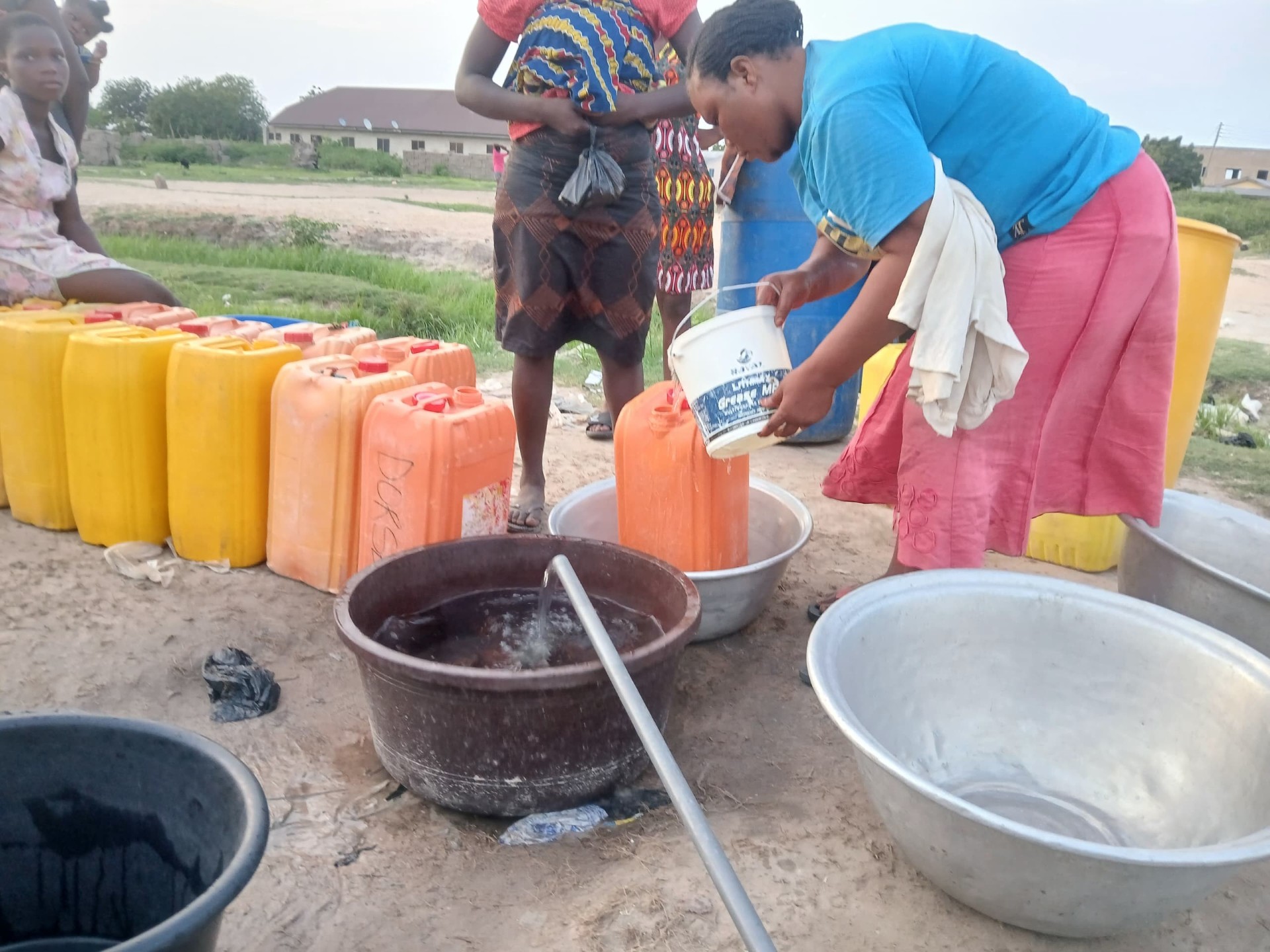
Communities in the Ada West District are grappling with a worsening water crisis, as technical failures at a key water station have disrupted supply for weeks, forcing residents in Sege, Bornikope, Koluedor, and Toflokpo to turn to unsafe and untreated water sources for survival.
At the heart of the issue is a damaged transformer and related technical setbacks at the district’s main water station, according to Ezekiel Awinyan, the Water System Manager at the Community Water and Sanitation Agency (CWSA). The breakdown has crippled the ability to pump and distribute water to thousands of homes across the affected communities.
In the absence of regular water flow from taps, residents have resorted to stagnant streams, open wells, and boreholes, with some even sharing contaminated water sources with animals. The health implications are severe, with risks of waterborne diseases rising as people consume and bathe in untreated water.
“Sometimes, the only water we get is from shallow ponds used by livestock,” lamented Florence Alimo, a resident of Sege. “We don’t have a choice.”
Previously, many relied on free byproducts from a local sachet water factory to meet their domestic water needs. However, the current scarcity has prompted the factory to begin selling the water instead—further straining the finances of already burdened households.
In response, Ernest Kugblenu, Assembly Member for the Sege-Koni Electoral Area, has partnered with Member of Parliament Daniel Kisseh Bassey to provide subsidised water through tanker services. While the effort has brought some relief, Kugblenu cautioned that the tanker water is not treated and must be boiled before use.
“This is only a temporary fix,” Kugblenu noted. “Long-term investment is needed to restore and maintain the water infrastructure.”
Community leaders and residents are now urging the Ada West District Assembly, the MP’s office, and the CWSA to act swiftly to repair damaged infrastructure, restore consistent water supply, and prioritize public health.
With the dry season intensifying, the urgency grows. Residents say the lack of clean water is not just an inconvenience—but a looming public health emergency.






