
















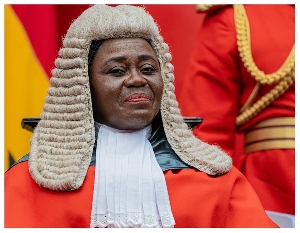
Chief Justice Gertrude Torkornoo has wielded the Constitution itself as her shield, invoking judicial immunity and collective decision-making to dismantle the latest petition—her third—to remove her from office under Article 146.
In a pointed written response to President John Dramani Mahama dated April 7, 2025, the Chief Justice categorically denied senior police officer Ayamga Akolgo’s accusations that she abused her office by ordering his arrest during Supreme Court proceedings simply for taking “demeaning comments” at issue.
Key pillars of her defense include:
- Collective Judicial Authority:
Torkornoo emphasized that “the presiding Judge … is not the court,” underscoring that Supreme Court rulings reflect the full bench’s deliberation, not any single justice’s unilateral action. - Constitutional Immunity (Article 127(3)):
She reminded critics that Superior Court justices enjoy immunity for acts carried out in their judicial capacity, arguing that “neither the Chief Justice nor any of the Justices on the panel… may be singled out to be sanctioned.” - Procedural Accuracy:
On claims of falsified records, Torkornoo explained that manual entries are “brief summaries” ratified by all judges, while electronically captured records are maintained by independent court recorders—placing record-keeping beyond her personal control.
While expressing regret “if any court user… had a bad experience,” she maintained Akolgo’s petition “fails to provide any element of misbehavior or incompetence” required for a removal finding.
Akolgo’s bid to classify her actions as “stated misbehavior and incompetence”—the constitutional threshold for impeachment—now faces a formidable roadblock. By turning to Articles 127 and 146, the Chief Justice has spotlighted the tightrope between judicial accountability and the constitutional safeguards that ensure an impartial, independent judiciary. The fallout from this clash may soon redefine the balance of power between Ghana’s courts and the office of the President.






