
















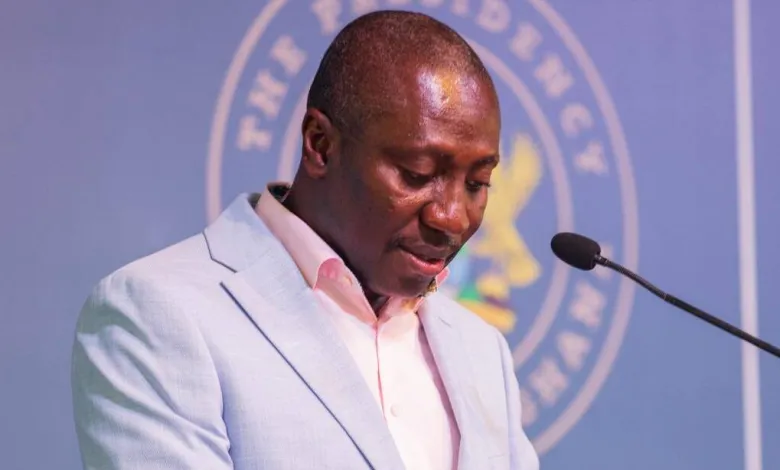
At the 2025 Kwahu Business Forum, Minority Leader in Parliament, Alexander Kwamena Afenyo-Markin, delivered a rousing call for a nationwide cultural reset—one aimed at shifting Ghana’s mindset towards civic responsibility, hard work, and entrepreneurial meritocracy.
Addressing industry players, policymakers, and youth entrepreneurs in Mpraeso-Kwahu, Afenyo-Markin proposed the creation of a National Orientation Programme to instill values of discipline, integrity, and enterprise. He argued that a deep-seated cultural transformation is critical if Ghana is to move away from the entrenched norm of political favoritism and into an era where merit drives opportunity.
“Our national development cannot be built on connections and partisanship,” he said. “We must train our people—especially the youth—to value excellence over entitlement, merit over shortcuts.”
Drawing from his own turbulent journey in Ghana’s transport and logistics sector, Afenyo-Markin painted a candid picture of the bureaucratic frustrations, labor indiscipline, and political sabotage that stifled his business post-2008. Despite working on major logistics routes supporting key industries, he recounted how his business was targeted due to perceived political affiliations—until intervention came from then Vice President John Mahama.
“Entrepreneurship in Ghana should not be a political gamble,” he stated firmly. “We must stop tagging businesspeople based on party lines. We need to create an environment where private sector innovation is encouraged and protected—regardless of who’s in power.”
He further emphasized that Ghana’s overburdened public sector can no longer serve as the primary employment source. “The future of jobs lies in the private sector,” he noted, calling on banks and financial institutions to go beyond lending by developing tailored, growth-oriented financial products for local SMEs.
Afenyo-Markin urged industry stakeholders to become champions of change—not just participants—by driving inclusive, merit-based economic development and mentoring young entrepreneurs.
He also lauded President Mahama for founding the Kwahu Business Forum, calling it a valuable space for shaping the future of Ghanaian enterprise. “We need more platforms like this to turn dialogue into tangible change,” he said.
Ultimately, the Minority Leader’s message was clear: Ghana needs more than economic reform—it needs a mindset revolution that embraces fairness, fuels innovation, and builds a resilient entrepreneurial culture grounded in merit and purpose.






