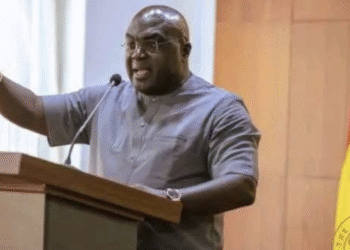
Ghana’s Attorney-General and Minister for Justice, Dr. Dominic Ayine, has shed new light on the behind-the-scenes challenges his office faced in prosecuting former UniBank executives—pointing to a deliberate and early effort by the accused to hide assets and frustrate recovery efforts.
Speaking during an edition of the Ministry of Justice’s Accountability Series, Dr. Ayine revealed that asset tracing in the UniBank case was significantly hindered because the accused individuals began concealing their assets as early as October 2024, months before a major prosecutorial decision was taken.
“We are doing asset tracing in that case, but it has been very difficult,” he noted.
“They started the process of hiding their assets way back in October 2024.”
According to the Attorney-General, this obstruction made it impossible to guarantee a conviction and full asset recovery through a criminal trial. As a result, the state adopted a more strategic approach—aimed at securing at least 60% recovery of lost funds via civil litigation and structured settlements.
Structured Recovery Over Uncertain Prosecution
Dr. Ayine disclosed that GH¢824 million worth of assets had already been recovered and would be handed over to the state. An additional GH¢1.2 billion is expected to be retrieved from third parties who held UniBank funds, including contractors who were paid through the bank before it went under.
“These are monies being held by third parties, including contractors who were paid under the instruction of UniBank,” he said.
He added that the state’s phased recovery strategy is not only more practical under the circumstances but also aligned with broader fiscal recovery goals.
“In the case at hand, 100% recovery was not possible, and a conviction was not guaranteed,” he explained.
“So we established a structured pathway for recovering GH¢1.2 billion through the civil process.”
Backstory to UniBank’s Collapse
Dr. Ayine also gave insight into a missed opportunity that could have averted UniBank’s collapse. In 2018, the bank had proposed that the government route GH¢2.9 billion in contractor payments through UniBank, which it claimed could stabilize its books and prevent insolvency.
However, the then Finance Ministry rejected the offer—backed by the Bank of Ghana—setting in motion events that led to the bank’s downfall.
“UniBank reached out to government, saying pay the contractors through us so we can use the inflows to stay afloat. That proposal was flatly rejected,” Dr. Ayine revealed.
A New Approach to Governance and Financial Sector Accountability
Contrasting past and present approaches, the Attorney-General praised the current Finance Minister, Dr. Cassiel Ato Forson, for choosing to support vulnerable banks rather than collapse them.
“That is what we call wisdom in governance,” he said, highlighting Forson’s move to preserve jobs and keep banks operating.
As investigations continue into other high-profile financial scandals, including the National Service Authority and the SkyTrain project, the Attorney-General’s remarks offer a sobering view into how asset concealment, prosecutorial limitations, and political decisions intersect in Ghana’s financial accountability landscape.
Dr. Ayine concluded by pledging transparency and diligence in all ongoing investigations and prosecutions, noting that his office is working closely with state agencies to ensure no stolen funds remain unaccounted for.