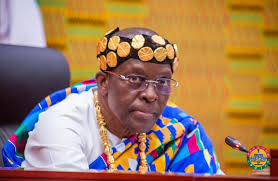
The growing spread of misinformation, disinformation and deepfake content poses a serious threat to Ghana’s democratic development, Speaker of Parliament Alban Sumana Kingsford Bagbin and the National Commission for Civic Education (NCCE) have warned.
They have consequently called for stronger collaboration between the media and civic education institutions to equip citizens with reliable information and strengthen their ability to participate responsibly in Ghana’s democratic processes.
The Speaker said the effectiveness of democracy depended not only on elections but also on citizens having access to accurate information and understanding their constitutional rights and responsibilities.
Mr Bagbin made the call in Accra in a speech read on his behalf at a Press Soirée organised by the NCCE on the theme: “Strengthening Civic Education through Strategic Partnerships.”
He said the rapid growth of digital platforms had made the media increasingly influential in shaping public opinion, but had also created opportunities for false information to spread quickly and undermine public trust.
“The freedom of the media must continue to be protected, but freedom must be exercised with responsibility,” he said.
According to the Speaker, journalists and media organisations must therefore place accuracy, fairness, professionalism and the national interest at the centre of their work, particularly when reporting on sensitive national issues.
He said the NCCE-media partnership should move beyond occasional engagements and develop into a sustained collaboration capable of strengthening responsible citizenship and deepening Ghana’s democratic culture.
Mr Bagbin stressed that citizens should be interested in more than the periodic casting of ballots, urging them to follow how laws were made, how public resources were used, how policies were formulated and how public officials were held accountable.
He said Parliament, the NCCE, the media, civil society organisations, religious and traditional authorities, educational institutions, development partners and the private sector all had complementary roles to play in building an informed citizenry.
The Speaker also called for increased investment in civic education among young people, arguing that they should be empowered to participate in governance and community development rather than being mobilised only during election periods.
He commended the NCCE’s Civic Education Clubs, Project Citizen and CivicFest initiatives and urged the Commission to expand them to give young people practical opportunities to identify challenges in their communities, engage duty-bearers and contribute to finding solutions.
NCCE Chairperson, Kathleen Addy, similarly warned that the changing information environment required greater responsibility from journalists and media organisations.
She said the media remained indispensable to the reach and effectiveness of civic education because it provided platforms through which citizens could engage national issues and hold public officials accountable.
“If we don’t have reach, if we don’t have the media to amplify the things that we do, we will not be as impactful as we can be,” she said.
Ms Addy, however, cautioned against treating media freedom as an exemption from professional responsibility, particularly in an environment where misinformation, disinformation, hate speech and deepfakes could reach large audiences within minutes.
“Freedom from criminal sanction is not intended to become freedom from professional responsibility,” she said.
She urged journalists to strengthen verification and public-interest reporting while using digital technologies to promote truth, tolerance and responsible communication.
Deputy EU Ambassador to Ghana, Jonas Claes, also identified disinformation as a major challenge confronting democratic societies, warning that deliberate manipulation of information could undermine public confidence and distort democratic debate.
He reaffirmed the European Union’s support for Ghana’s democratic institutions, the rule of law and a free press, while cautioning against taking the country’s democratic gains for granted.
“We should not take that for granted,” he cautioned.
Mr Claes said the EU was supporting a new African Media Integrity and Resilience Programme aimed at strengthening journalistic skills, including information verification and investigative reporting.
He added that the EU would continue supporting the NCCE through GIZ in efforts to strengthen the rule of law and combat corruption.
The renewed call for collaboration comes at a time when the distinction between credible information and manipulated content is becoming increasingly difficult for citizens to establish, particularly on digital platforms.
The stakeholders therefore stressed the need for civic education and responsible journalism to work together to ensure that citizens are not only informed but are also equipped to critically assess information before accepting or sharing it.
The objective, Mr Bagbin said, should ultimately be to build citizens who see themselves as active participants in national development and who can hold public institutions accountable while contributing constructively to Ghana’s democratic process.