
















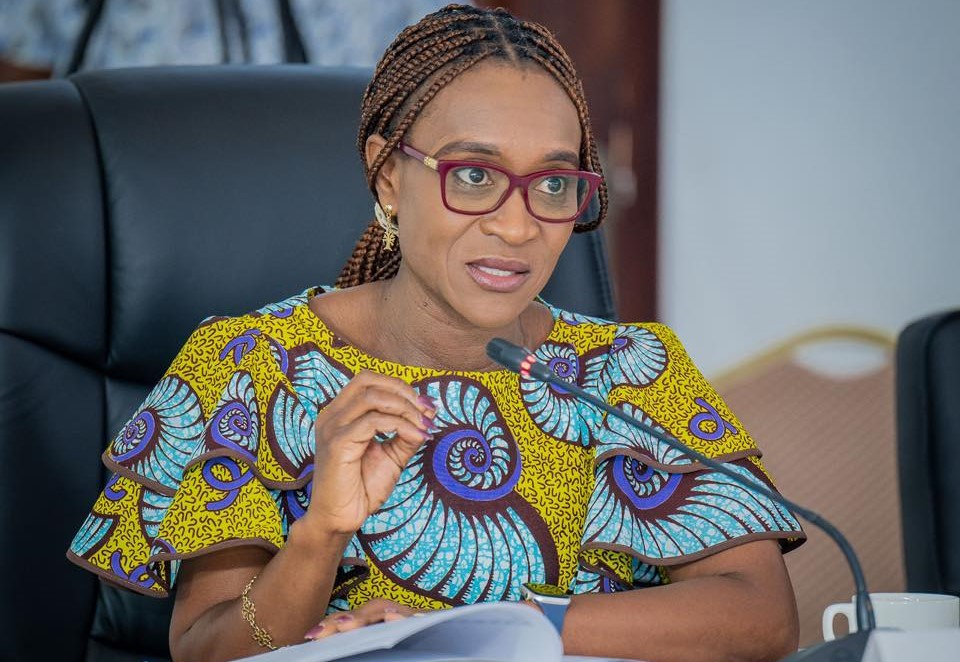
Former Deputy Finance Minister and Chairperson of Parliament’s Public Accounts Committee, Abena Osei-Asare, has raised concerns that Ghanaian taxpayers could ultimately bear the cost of the Bank of Ghana’s worsening financial position, calling for urgent parliamentary scrutiny of the central bank’s growing losses and negative equity.
Reacting to the Bank’s 2025 audited financial statements, the Atiwa East Member of Parliament said the central bank’s deteriorating balance sheet should not be treated as a routine accounting issue, warning that the financial strain could spill over into the country’s public finances.
In a statement posted on Facebook on Sunday, Mrs Osei-Asare noted that the Bank’s negative equity widened significantly from GH¢58.62 billion in 2024 to GH¢93.82 billion in 2025, while its annual loss increased from GH¢9.49 billion to GH¢15.63 billion.
She said disclosures in the Bank’s financial statements confirmed that government had committed to recapitalising the central bank through a phased programme scheduled to run from 2026 to 2032.
According to her, that arrangement could have serious implications for the national budget and taxpayers.
“That means today’s losses become tomorrow’s taxpayer cost, debt instrument, or fiscal trade-off,” she stated.
Mrs Osei-Asare described the Bank’s growing negative equity as a major fiscal red flag that requires immediate national attention.
“A functioning central bank with a GH¢93.82 billion negative equity hole is still a public finance problem, regardless of its operational continuity,” she stressed.
She called on government to publicly disclose the full details of its recapitalisation plan, including any memorandum of understanding, proposed bond issuances, cash injections, or potential write-offs linked to restoring the Bank’s capital base.
The former Deputy Finance Minister also urged Parliament’s Finance, Economy and Public Accounts Committees to summon the Governor of the Bank of Ghana, the Finance Minister, external auditors, and other relevant officials to provide urgent explanations.
She maintained that any effort to recapitalise the central bank using public funds must be subjected to full parliamentary oversight and transparent fiscal accountability.
“The public deserves to know who is responsible, under what terms, and at what cost to taxpayers,” she said.






