
















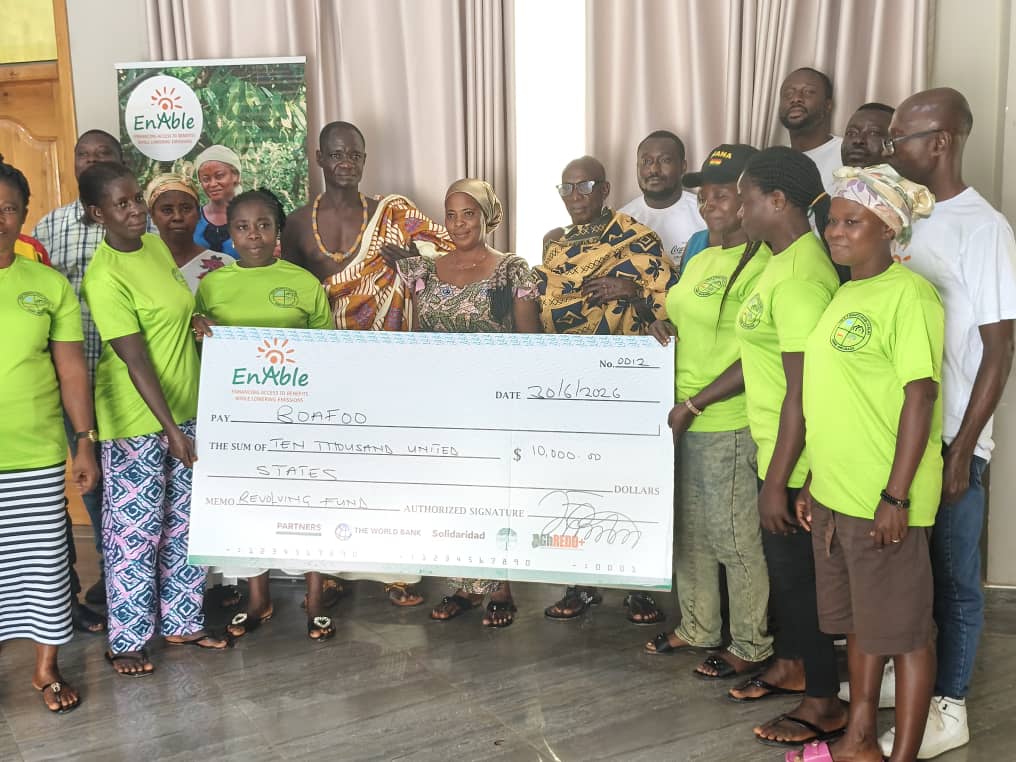
Hundreds of cocoa farmers and vulnerable groups in Ghana’s cocoa-growing communities are set to benefit from improved access to finance following the disbursement of GH¢2 million in revolving grants to 18 Village Savings and Loans Associations (VSLAs).
The support, provided by Solidaridad West Africa in partnership with Tropenbos Ghana, forms part of the EnABLE Project, a World Bank-funded initiative promoting sustainable livelihoods and forest conservation.
The GH¢2 million represents the pilot phase of a $1 million revolving fund that will eventually support 103 VSLAs, women-led groups, vulnerable households and other community organisations across six hotspot intervention areas where the project is being implemented.
Programme Manager at Solidaridad West Africa, Alfred Fosu, said the initiative is designed to improve access to affordable credit for rural cocoa-growing communities, with special attention given to women, migrants and persons with disabilities who often face barriers to financial services and economic opportunities.
He explained that the project has strengthened community savings groups, enabling members to save collectively and access small loans to invest in sustainable livelihood activities.
Mr. Fosu urged beneficiaries to manage the revolving fund responsibly, stressing that transparency, accountability and collective ownership would ensure the scheme continued benefiting communities for many years.
Programme Manager at Tropenbos Ghana, Evans Mensah Sampene, said beneficiary groups received extensive training in financial management, leadership, record keeping, accountability and conflict resolution before the funds were released.
According to him, the revolving fund demonstrates the project’s commitment to ensuring that vulnerable groups share in the economic benefits of Ghana’s sustainable cocoa production and forest conservation programmes.
Speaking on behalf of the beneficiaries, Theresah Aidoo, Secretary of the Save for Tomorrow Group at Nkwadum, welcomed the support, saying it would enable members to invest in their farms and businesses.
As a cocoa farmer, she said the loan would help her purchase fertiliser, employ labour and improve productivity, while the revolving nature of the fund would allow other group members to borrow and expand their own economic activities.
She assured the implementing organisations that the funds would be managed prudently to ensure long-term benefits for their communities.






