
















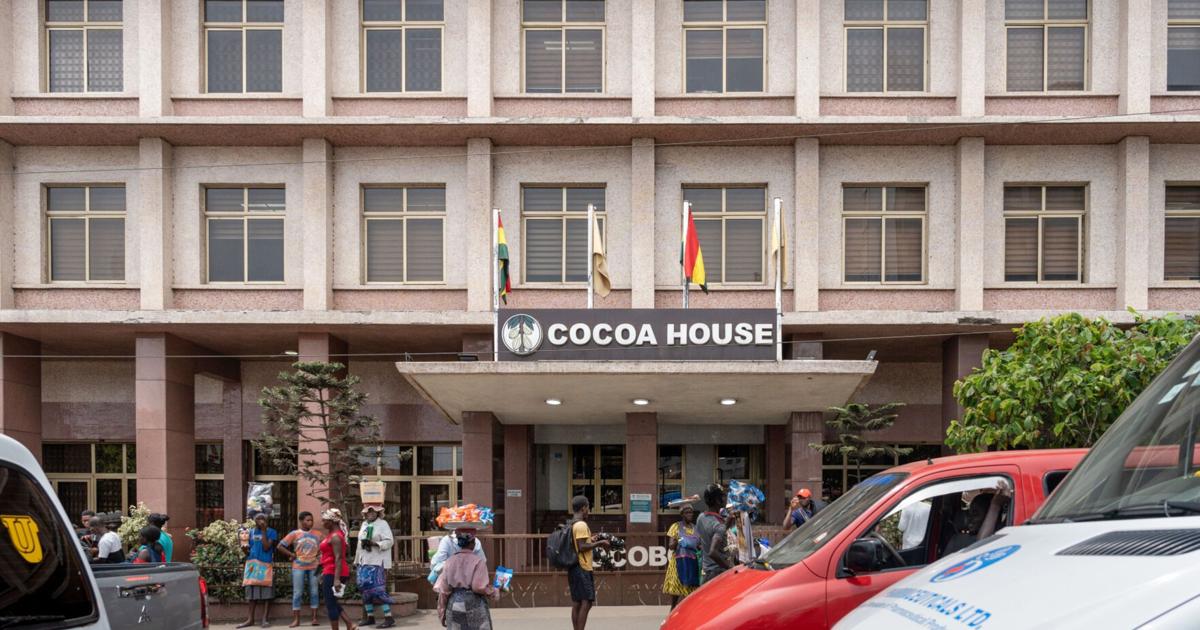
The Ghana Cocoa Board (COCOBOD) is reinforcing regulatory compliance and farmer support systems in the Western North Region as it prepares for the 2025/2026 cocoa season. At a recent engagement in the Bodi District, officials from the Cocoa Health and Extension Division met with farmers to educate them on pricing policies and operational requirements.
While acknowledging the central role cocoa farmers play in Ghana’s economy, the session went beyond appreciation—delivering a firm message on the need for accountability, proper registration, and responsible farm practices as key pillars of Ghana’s cocoa sustainability strategy.
Cocoa Card Now Mandatory for All Transactions
A major policy highlight came from Mr. Charles Kabotei Ocancy, Deputy Regional Manager of the Cocoa Health and Extension Division, who announced that starting next season, no cocoa would be purchased from farmers without a registered Cocoa Card.
“We want to ensure transparency and efficiency in transactions. Farmers without the card or with outdated personal information must visit the district office for free registration or updates,” he said.
This directive forms part of a broader effort to digitise Ghana’s cocoa sector and curb inefficiencies and fraud in cocoa purchasing and subsidy distribution.
Price Stability Amid Currency Gains
Mr. Kennedy Osei Ampofo, an officer with COCOBOD’s Public Affairs Department, assured farmers that despite the strengthening of the Ghanaian cedi, the producer price of GH¢3,100 per bag remains unchanged, offering stability for farmers’ incomes.
“Even as the cedi gains strength, we’ve maintained the same price per bag to protect your livelihoods and show our appreciation for your hard work,” he told farmers.
He also issued a caution against the use of unapproved agrochemicals, which he said could compromise yields and undermine the integrity of Ghana’s cocoa reputation globally.
Local Support and Infrastructure Commitments
The District Chief Executive of Bodi, Mr. Stephen Baidoo, revealed that efforts are underway to boost the supply of agrochemicals to combat the black pod disease, a major threat to cocoa production in the region.
“The government is working to increase the allocation of fungicides in the district to ensure no farmer is left behind in the spraying programme,” he announced.
Chiefs and Farmers Call for Input Affordability
In a show of solidarity with cocoa farmers, Nana Kwasi Ofori Ababio, Chief of Sefwi Bodi, appealed to the government to review and reduce prices of cocoa farming inputs while improving availability in rural markets.
“High input costs are choking our farmers. We need the government to make fertilizers and other inputs affordable so we can keep our farms productive,” the chief stated.
A Sector on the Brink of Reform
As Ghana looks to modernise its cocoa sector and ensure fair returns for farmers, engagements such as the one in Bodi signal COCOBOD’s increasing focus on compliance, digitisation, and equitable support distribution. The message is clear: for Ghana’s cocoa industry to thrive, farmers must be empowered, but also prepared to work within new regulatory frameworks.






