
















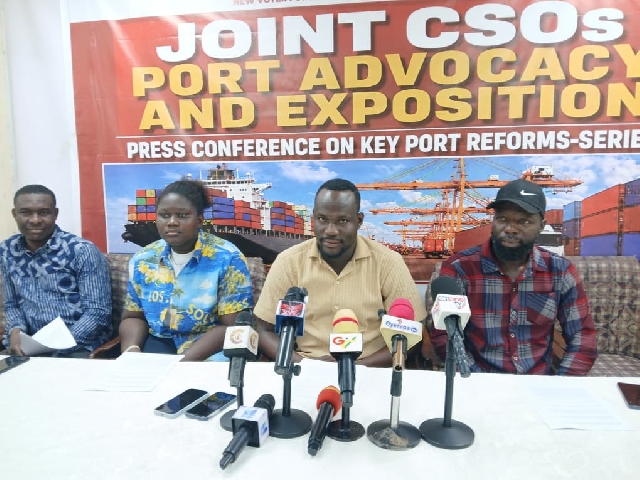
Civil Society Organisations (CSOs) have called for sweeping reforms at Ghana’s ports, citing alleged inefficiencies, governance gaps, and questionable practices they say are undermining state revenue and weakening trade competitiveness.
At a press conference in Accra on Wednesday, June 3, 2026, the groups, including the New Voter Forum and the Democratic Credentials Network Ghana, argued that weaknesses in port disinfection services and customs management systems are creating financial losses for the state while exposing the country to health and operational risks.
They said their concerns form part of a broader push to support government’s “reset agenda” by improving transparency and efficiency in key trade facilitation systems.
Speaking at the event, Conqueror M. Korto, Lead Governor of the New Voter Forum, alleged that entrenched interests within the port ecosystem have created what he described as a pattern of “crony capitalism” that distorts service delivery and accountability.
The CSOs questioned the performance of private contractors involved in port disinfection services, particularly LCB Worldwide, arguing that public funds spent on the service do not reflect value delivered. They also raised concerns about oversight by relevant state institutions, including the Ghana Health Service.
They further referenced earlier findings attributed to the Office of the Special Prosecutor (OSP), which reportedly pointed to irregularities in port-related contracts and financial management, and called for clarity on corrective actions taken.
On customs operations, the groups criticised the Integrated Customs Management System (ICUMS), describing it as unstable and prone to disruptions that delay cargo clearance and increase costs for importers and traders.
They argued that system downtime often results in demurrage charges and operational bottlenecks, which they say reduce Ghana’s competitiveness as a regional logistics hub.
Among their proposals, the CSOs called for an independent audit of ICUMS by an external firm, a multi-stakeholder review of port disinfection arrangements led by the Ghana Shippers Authority, and stronger implementation of existing corruption-risk recommendations.
They also proposed the creation of an independent regulatory body to oversee digital trade systems, separate from existing revenue and finance institutions.
According to the groups, sustained inefficiencies and alleged rent-seeking practices risk eroding public trust and weakening Ghana’s position in regional trade.
They urged Parliament, the media, traders, and civil society actors to intensify scrutiny of port operations, insisting that reforms are necessary to safeguard national economic interests.






