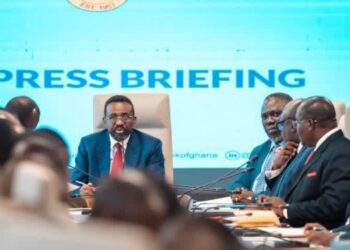
Margaret Ansei, Chief Executive Officer of the Ghana Enterprises Agency (GEA), says Ghana’s ambition to run a 24-hour economy can only be realized if businesses—especially Micro, Small, and Medium Enterprises (MSMEs)—embrace technology and efficiency.
Speaking at the Kwahu Business Forum, Ms. Ansei warned that without innovation, the policy could become a costly burden.
“Attempting a 24-hour economy without addressing inefficiencies will be an expensive adventure,” she said, referencing a recent GEA pilot project where businesses suffered up to 17.9% losses in sales and 28% in productivity due to operational inefficiencies.
Highlighting the importance of digital transformation, she introduced the U-SPARK Project—an initiative in partnership with UNIDO—that equips MSMEs with real-time data tracking and performance tools. “This has already led to a 36% improvement in overall efficiency for participating businesses,” she revealed.
Under her leadership, GEA has intensified its focus on inclusive digital support for marginalized groups, including tailored financing for women, youth, and persons with disabilities, as well as digitization support for entrepreneurs with special needs.
“Our RESET Agenda is not just about policy—it’s about giving every business the tools to succeed in a competitive and fast-paced economy,” she added.
Ms. Ansei reaffirmed the GEA’s alignment with President John Dramani Mahama’s 24-hour economy agenda, stressing the agency’s commitment to strengthening Ghana’s MSME sector as a foundation for sustainable economic growth.
The Kwahu Business Forum gathered major private sector players, financial institutions, policymakers, and development partners to explore strategies for industrial and inclusive economic transformation.