Fishing communities across Ghana are calling for targeted scholarship programmes to help address persistent shortages of teachers and healthcare professionals in underserved areas along the Volta Lake.
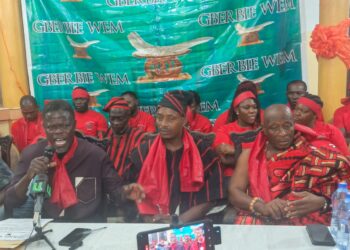
The appeal was made during the launch of the Chief Fishermen and Queen Fishmongers Council Association in Kete Krachi in the Oti Region, where stakeholders highlighted the urgent need for sustainable solutions to improve education and healthcare delivery in riparian communities.
Speaking at the event, the National Vice President of the Council, Mr Daniel Akpaglo Nyamekor, urged the Government and Metropolitan, Municipal and District Assemblies (MMDAs) to establish scholarship schemes for qualified students from fishing communities to pursue studies at Colleges of Education and Nursing Training Institutions.
According to him, while government investments in educational infrastructure have improved access to schooling in many parts of the country, several fishing communities continue to struggle with inadequate facilities and difficulties in attracting and retaining qualified teachers.
He noted that these challenges have negatively affected academic performance and limited opportunities for young people, ultimately slowing the socio-economic development of affected communities.
Mr Nyamekor argued that supporting local students to train as teachers and healthcare professionals would create a reliable workforce capable of serving their own communities.
“By investing in the education and training of young people from these communities, we can build a pool of professionals who understand the local environment, language and culture, making service delivery more effective and sustainable,” he said.
He further explained that teachers and nurses with roots in fishing communities are more likely to accept postings and remain in such areas, helping to reduce staff turnover and improve the continuity of essential services.
The proposed scholarship initiative, he added, would also strengthen government decentralisation efforts by encouraging local participation in community development and enhancing ownership of social intervention programmes.
Mr Nyamekor stressed that stronger education and healthcare systems would improve household resilience, boost literacy levels, and enable fisherfolk and fish processors to adopt modern techniques, diversify their incomes, and participate more actively in local governance.
Participants at the launch welcomed the proposal, describing it as a practical step toward addressing longstanding development challenges in coastal and lakeside communities. They pledged to work closely with District Assemblies, the Ghana Education Service and the Ministry of Health to identify deserving beneficiaries and establish transparent monitoring systems for the programme.
Stakeholders expressed confidence that such an initiative would complement existing government interventions and help create lasting improvements in the quality of life of people living in Ghana’s fishing communities.