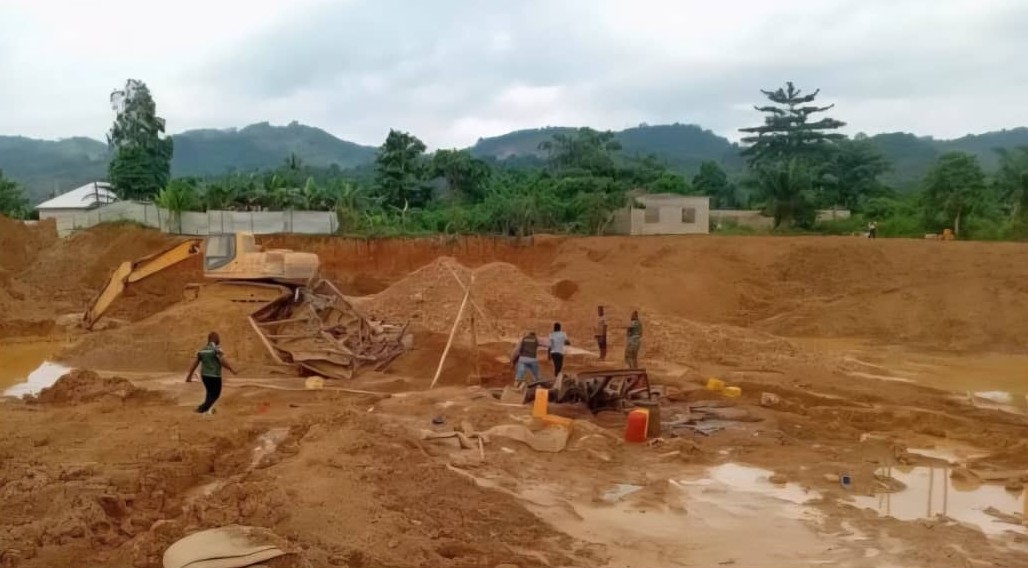
Ghana could face centuries of environmental damage from illegal mining, with polluted farmlands requiring up to 300 years to recover fully, a University of Cape Coast (UCC) professor has warned.
Professor Albert Ebo Duncan, a Civil and Environmental Engineering expert at UCC, said rivers contaminated by illegal mining could take up to 100 years to regain their original purity, while chemically degraded lands could require approximately 300 years to recover.
He attributed the prolonged recovery period to the accumulation of heavy metals and toxic chemicals used in illegal mining activities, warning that the environmental consequences could persist long after galamsey operations have ended.
Speaking at an anti-galamsey public education forum at Praso in the Twifo Atti-Morkwa District of the Central Region, Prof. Duncan stressed that stopping illegal mining alone would not immediately reverse the damage already inflicted on the environment.
He explained that although immediate clean-up and treatment interventions could help address the pollution, natural processes required to remove contaminants from water bodies and break down toxic substances in soils were extremely slow.
The forum was organised by UCC’s Department of Civil and Environmental Engineering in collaboration with the Canada Fund for Local Initiatives (CFLI).
It forms part of a two-month house-to-house campaign aimed at educating communities about the environmental and public health consequences of illegal mining.
As part of the initiative, 16 trained young environmental advocates will be deployed in groups to educate residents, particularly young people, on the dangers of galamsey. Selected teachers will also support the campaign.
The programme specifically targets schoolchildren and students, seeking to instil environmental responsibility, cleanliness and civic consciousness among the younger generation.
Pupils at the forum also staged drama performances demonstrating how pollution of water bodies threatens agriculture, human health and national food security.
Prof. Duncan urged young people to reject illegal mining and called on the government, traditional authorities, communities and civil society organisations to intensify efforts to protect Ghana’s natural resources.
He warned that the long-term consequences of galamsey made it imperative for all stakeholders to work together to halt the destruction of the country’s water bodies and farmlands.