
















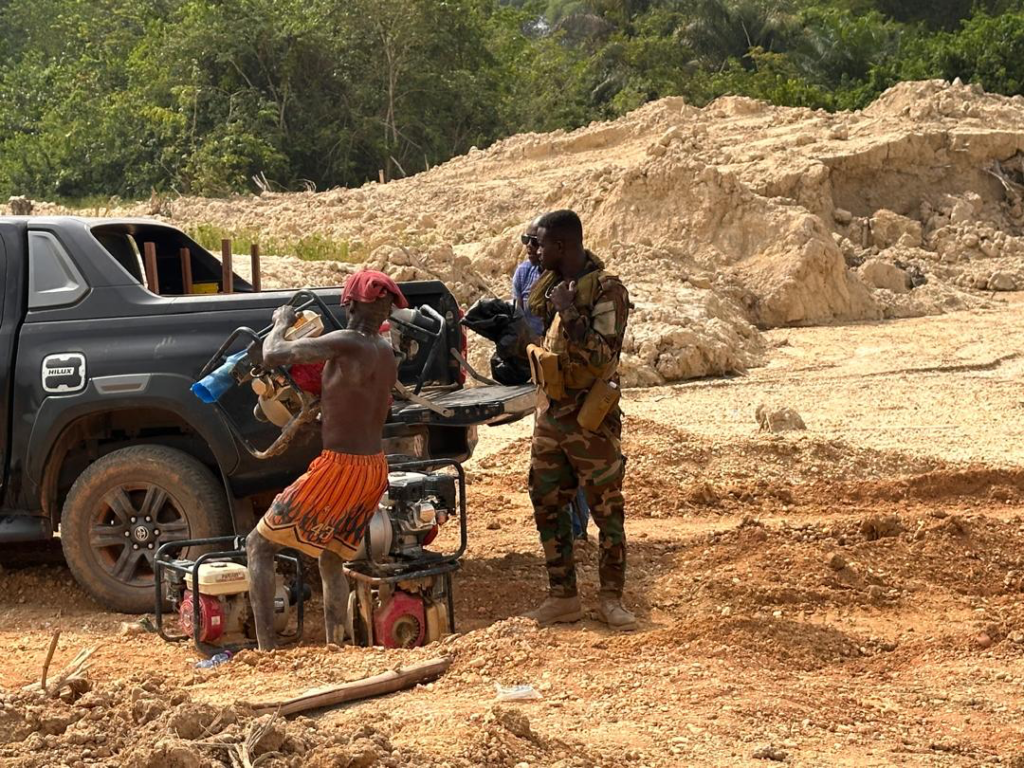
A government advisory team conducting a fact-finding mission on illegal mining (galamsey) encountered fierce resistance in parts of the Western and Central regions as they moved to seize and destroy mining equipment.
The operation, aimed at mitigating the environmental devastation caused by galamsey, saw the team confiscating pumping machines, generators, and excavators, while also setting Changfan machines ablaze in heavily affected areas such as Anwia, Prestea, and Dunkwa.
However, in Dunkwa, tensions escalated when the illegal miners, reportedly led by the National Democratic Congress (NDC) Constituency Chairman, confronted the team over the seizures. The chairman, backed by furious miners and residents, protested that he had not been consulted prior to the raid, fueling anger among the local community.
The situation turned volatile as the protesters, many of whom rely on illegal mining for their livelihoods, blocked roads and challenged the security forces accompanying the team. In Anwia, illegal mining had severely damaged infrastructure, including roads and storm drains, prompting a forceful response from the advisory team, which dismantled equipment and burned down makeshift mining camps.
Further operations at a mining site behind a technical school in Nkroful resulted in the seizure of multiple pumps and generators. Meanwhile, in Baduwa No.2 in the Upper Denkyira East District, galamsey activities along the Offin River had caused frequent floods and destroyed farmlands, worsening environmental concerns.
The situation reached a critical point when an aerial survey of Dunkwa township revealed extensive illegal mining dangerously close to the town’s main bridge. As the team assessed the damage, a growing crowd gathered, demanding an immediate halt to the operation and openly defying security personnel.
Despite the hostility, Rear Admiral (Rtd) Moses Beick-Baffour and his advisory team remain determined to inform government policy on galamsey and enhance future enforcement efforts.
The fierce resistance highlights the deep-rooted political and social tensions surrounding the fight against illegal mining, raising serious questions about governance, local complicity, and the effectiveness of environmental regulations in Ghana.






