
















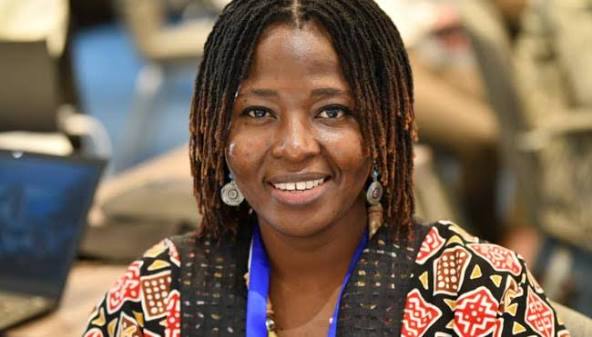
Ghana must give greater priority to the protection and sustainable management of its marine resources if the country is to fully benefit from the growing opportunities in the blue economy, marine biogeochemistry expert, Professor Edem Mahu, has said.
Prof. Mahu, Associate Professor of Marine Biogeochemistry at the University of Ghana, said the ocean should be regarded as a critical national asset and given the same level of attention as Ghana’s terrestrial resources in development planning and policymaking.
She noted that Ghana’s maritime territory was almost comparable in size to its land territory, making the sustainable management of the ocean crucial to the country’s long-term economic and social development.
Prof. Mahu, who is Co-Lead of the Ocean Margins Initiative and Chair of the OMI Laboratory at the University of Ghana, made the call in an interview with the Ghana News Agency.
She said the country had enormous opportunities to generate economic benefits from its marine resources, including opportunities linked to fisheries and other components of the blue economy.
However, she warned that these prospects could be undermined if marine ecosystems continued to receive inadequate attention from policymakers, institutions and the general public.
“Ghana has great potential when it comes to the blue economy and the benefits we can derive from the ocean. But to enjoy these benefits, we need to give the ocean the attention it deserves,” she said.
According to Prof. Mahu, protecting the ocean should not be considered the responsibility of scientists and coastal communities alone, stressing that the health of marine ecosystems directly affects the wellbeing and future of the entire country.
“The ocean’s problems should be a problem for all of us, not just scientists or coastal communities. Our future depends on the health of the ocean,” she stated.
Ocean education
Prof. Mahu further advocated the integration of ocean literacy into Ghana’s national education curriculum to help develop a stronger culture of marine conservation among the younger generation.
She said early exposure to ocean-related education would help children understand the importance of marine ecosystems and their role in Ghana’s economic and environmental future.
“People should not only discover the ocean when they get to university. Ocean education should be part of what is taught in our early school days,” she said.
She therefore urged policymakers, educational institutions and other stakeholders to adopt a more comprehensive approach to ocean governance, combining conservation with sustainable economic utilisation.
Prof. Mahu maintained that strengthening public awareness and national commitment to marine conservation would be critical to unlocking Ghana’s blue economy potential while safeguarding the ocean for future generations.






