
















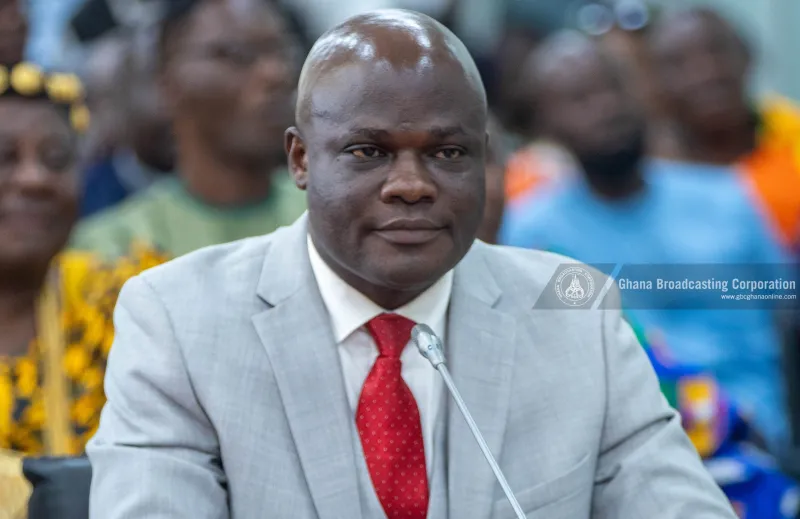
The Ministry for Local Government, Sanitation, and Religious Affairs, led by Minister Ahmed Ibrahim, has introduced a bold new initiative aimed at tackling Ghana’s persistent sanitation challenges by holding local authorities accountable for their performance in waste management.
Unveiling the plans at a press briefing in Accra on Monday, April 7, Minister Ibrahim announced the creation of a comprehensive sanitation league table that will assess and rank Metropolitan, Municipal, and District Assemblies (MMDAs) every month. The initiative is designed to instill a culture of accountability, encourage competition among local authorities, and ensure that both District Chief Executives (DCEs) and Metropolitan/Municipal Chief Executives (MCEs) remain focused on improving public hygiene and cleanliness.
The new framework, which will rank MMDAs on national, regional, and district levels, is aimed at addressing the ongoing sanitation issues faced by many communities across Ghana. Minister Ibrahim emphasized that this initiative will not only foster healthy competition but also ensure that local authorities and their leaders face consequences if they fail to meet established cleanliness and waste management standards.
“We are serious about improving sanitation across the country,” said Minister Ibrahim. “This league will be a driving force to ensure that local authorities put in the effort needed. If an assembly consistently ranks at the bottom, we will have to question whether its leadership is fit for the task at hand.”
Under the new plan, the sanitation league will monitor key indicators such as waste collection, the state of public spaces, and the effectiveness of drainage systems, all of which have been problematic in many urban areas, particularly in Ghana’s densely populated cities. Minister Ibrahim made it clear that this initiative would go beyond simply shaming poor performers. He emphasized that everyone involved— from local authorities to the general public— must put in the effort to improve the situation.
“Sanitation is a shared responsibility,” he stated. “This is not just about naming and shaming. It’s about collective action, and we all must work together to improve our environment.”
The initiative comes as Ghana continues to face significant sanitation challenges, including uncollected waste, poor drainage systems, and the ongoing problem of open defecation, which has led to increased public health concerns. Despite efforts such as the National Sanitation Day and the introduction of waste bins, the country’s sanitation progress has been hindered by poor enforcement, limited public participation, and institutional inefficiencies.
With the new sanitation league, local governments will be held accountable for the cleanliness and health of their communities, and the initiative is expected to bring much-needed attention to sanitation issues at the local level. By introducing a monthly ranking system, the government hopes to create a sense of urgency and competition that will drive real change and better waste management practices nationwide.






