
















Ghana’s improving economic conditions must now translate into greater access to long-term financing for businesses and productive sectors, Fidelity Bank Ghana has said.
The Bank said the country’s economic recovery would have limited impact if falling inflation, lower interest rates and stronger growth were not matched by a deeper debt capital market capable of financing businesses and major development projects.
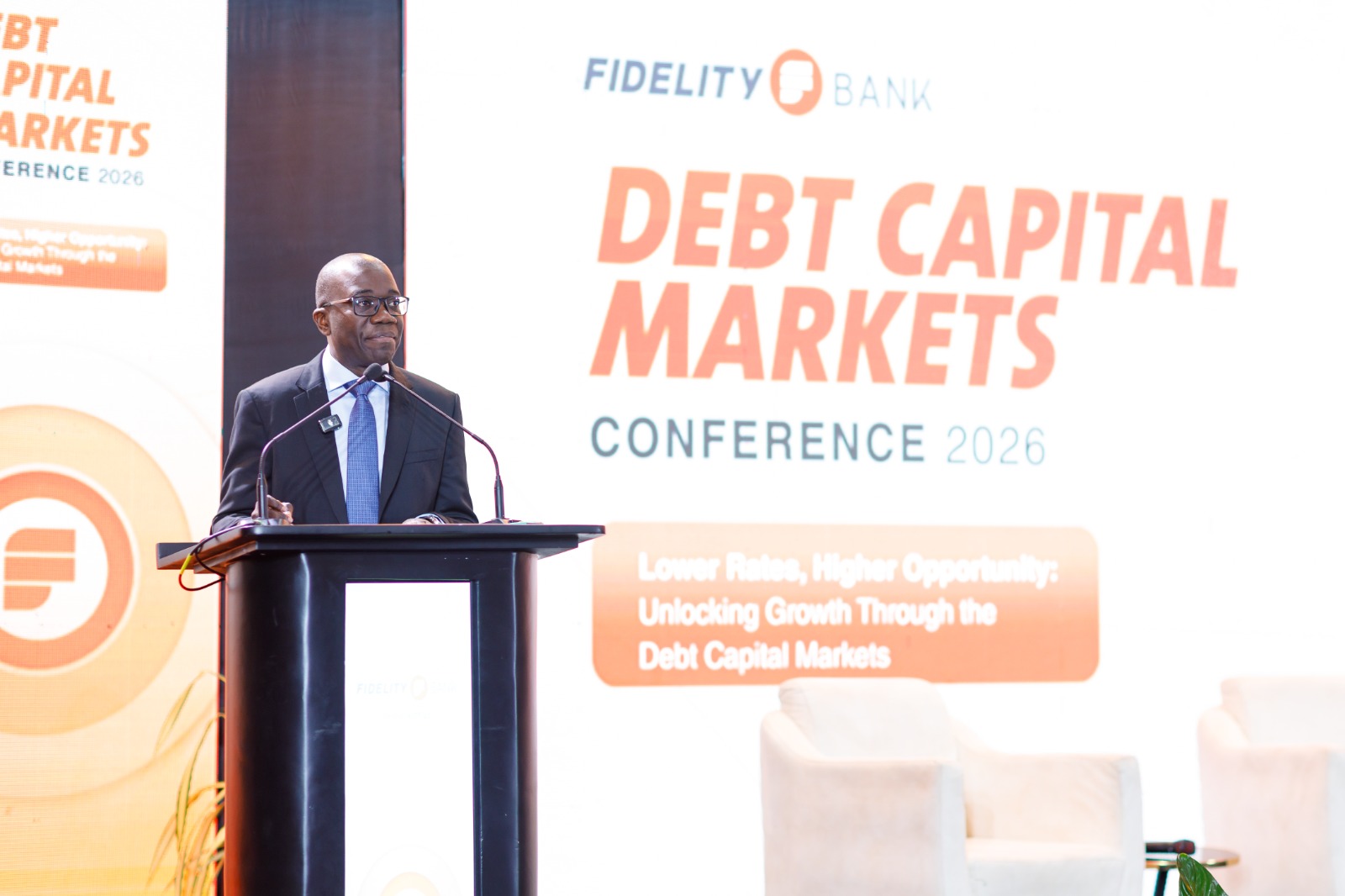
Managing Director of Fidelity Bank Ghana, Mr Julian Opuni, made the point at the Bank’s Debt Capital Markets Conference, held under the theme: “Lower Rates, Higher Opportunity: Unlocking Growth Through the Debt Capital Markets.”
He said the past three years had largely been devoted to stabilising the economy, but the focus must now shift towards creating financing structures that can support the next phase of growth.
“For capital-market participants, improving macroeconomic conditions are not an end in themselves. The practical question is how we convert macroeconomic stability into efficiently priced, long-term capital for productive investment,” he said.
Mr Opuni argued that a growing economy could not depend on a single source of financing, stressing the need for a broader funding architecture that gives businesses and investors more options.
He noted that Fidelity Bank had already supported debt capital-market transactions with an aggregate value exceeding GH¢30 billion, adding that a strong market could only be developed through sustained participation by financial institutions and other market players.
“A deep debt capital market is built from transaction by transaction, but it develops institution by institution,” he said.
The conference brought together the Bank of Ghana, Ministry of Finance, Ghana Stock Exchange/Ghana Fixed Income Market, Securities and Exchange Commission, National Pensions Regulatory Authority, institutional investors, issuers and other market leaders to examine how Ghana could channel capital into productive investment.
Governor of the Bank of Ghana, Dr Johnson Pandit Asiama, said recent economic indicators demonstrated the strength of the recovery, with real Gross Domestic Product growth reaching 6.4 per cent in the first quarter of 2026.
Headline inflation, he said, had declined from 54.1 per cent in December 2022 to 4.6 per cent in July 2026, while gross international reserves had risen to US$12.9 billion.
Dr Asiama identified the reopening of Ghana’s domestic bond market in March, following the expiry of the three-year restriction imposed under the Debt Exchange Programme, as one of the country’s most significant financial developments this year.
“This is a milestone; a transition from crisis management to active, orderly debt management,” he said.
He stressed, however, that the success of the debt market should ultimately be judged by its ability to finance real economic activity rather than simply by the volume of securities traded.
“The true measure of a deeper market would be found not on an auction sheet, but in that power project that was completed, that factory that expanded, the housing development that was financed, and the SME that finds room on a bank’s balance sheet because the right capital reached the right use,” he said.
Managing Director of the Ghana Stock Exchange, Madam Abena Amoah, said the country’s fixed-income market had made progress since the Ghana Fixed Income Market was established in 2015, but its development remained dependent on trust and stronger cooperation among market participants.
She said the debt capital market was still heavily concentrated around government securities, with corporate debt accounting for only a small share of overall activity.
“A market built predominantly around one issuer cannot achieve its full potential without broader private-sector participation,” she said.
Madam Amoah therefore urged banks such as Fidelity to take a leading role in expanding the market by issuing securities themselves and helping their corporate clients access the debt market.
Veteran economist and investment consultant Mr Kwame Pianim also cautioned stakeholders against taking macroeconomic stability for granted as Ghana transitions towards growth.
He called for stronger institutions and disciplined mobilisation of domestic pension and insurance funds to provide long-term financing for productive sectors.
Technical Advisor at the Ministry of Finance, Dr Theophilus Acheampong, said government was implementing reforms intended to institutionalise fiscal stability and prevent a return to the economic challenges of recent years.
He cited legislated fiscal rules, an independent fiscal council and a properly resourced sinking fund as measures designed to strengthen fiscal discipline.
The discussions underscored the growing need for Ghana to move from economic stabilisation towards a financing environment where lower inflation, improved investor confidence and stronger fiscal management can translate into affordable long-term capital for businesses and development projects.






