
















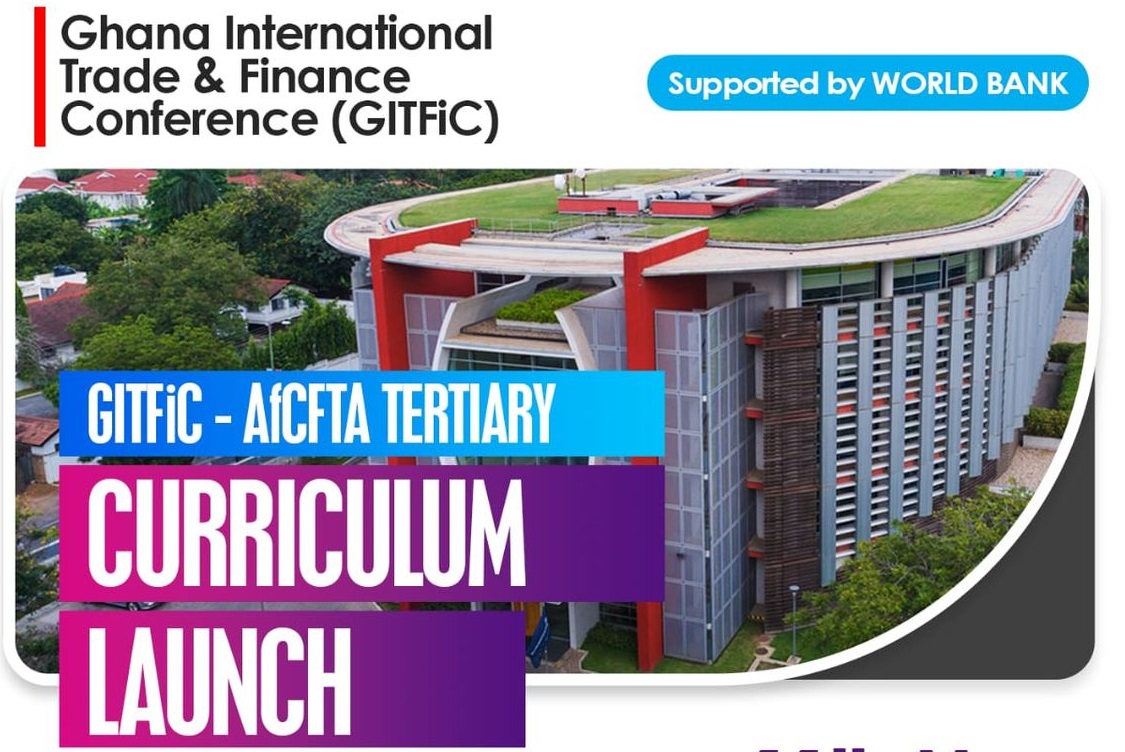
A new GITFiC-AfCFTA Curriculum has been introduced in tertiary institutions across AfCFTA-ratified member states to enhance students’ knowledge of the African Continental Free Trade Area (AfCFTA) and its impact on Africa’s economic integration.
Developed by the Ghana International Trade and Finance Conference (GITFiC), the curriculum is designed for students pursuing humanities, social sciences, and business. It aims to educate, inform, and prepare Africa’s youth to leverage the opportunities provided by AfCFTA, including entrepreneurship, industrialisation, and cross-border trade.
Themed “Impacting Knowledge, Accelerating Sensitization, and Preparing Africa’s Youthful Generation for the AfCFTA Through Education,” the course is expected to shape students’ mindsets on intra-African trade while promoting the philosophy of “Produced in Africa and Consumed by Africans.”n
Speaking at the launch, Mr. Bernard Ahiafor, First Deputy Speaker of Parliament, highlighted that AfCFTA presents a transformative opportunity to create an integrated African market for goods, services, capital, and investment. However, he stressed that achieving its full potential requires a well-informed, skilled, and trade-savvy youth.
“This curriculum is more than just a series of lessons—it is a powerful tool to equip African youth with the skills, knowledge, and mindset needed to thrive in the global economy,” Mr. Ahiafor noted.
Commending GITFiC for its role in shaping the curriculum, Mr. Ben Assiam, Director of Multilateral, Regional, and Bilateral Trade Division at the Ministry of Trade, Industry, and Agribusiness, described it as a crucial step in integrating trade knowledge into Africa’s educational framework.
He noted that the curriculum would provide students with a deep understanding of AfCFTA’s establishment, implementation, and operationalisation, as well as its socio-economic implications on Africa’s development.
GITFiC CEO, Mr. Selasi Koffi Ackom, emphasized that the curriculum launch marks the beginning of a journey toward empowering future leaders with strategic insights into Africa’s evolving economic landscape.
“Education is the cornerstone of progress. Through understanding, dialogue, and collective effort, we can transform challenges into opportunities and set a solid foundation for Africa’s economic future,” he said.
As the AfCFTA continues to redefine trade and economic cooperation in Africa, the introduction of this curriculum signals a proactive approach to preparing young Africans to play a pivotal role in shaping the continent’s prosperity.






