
















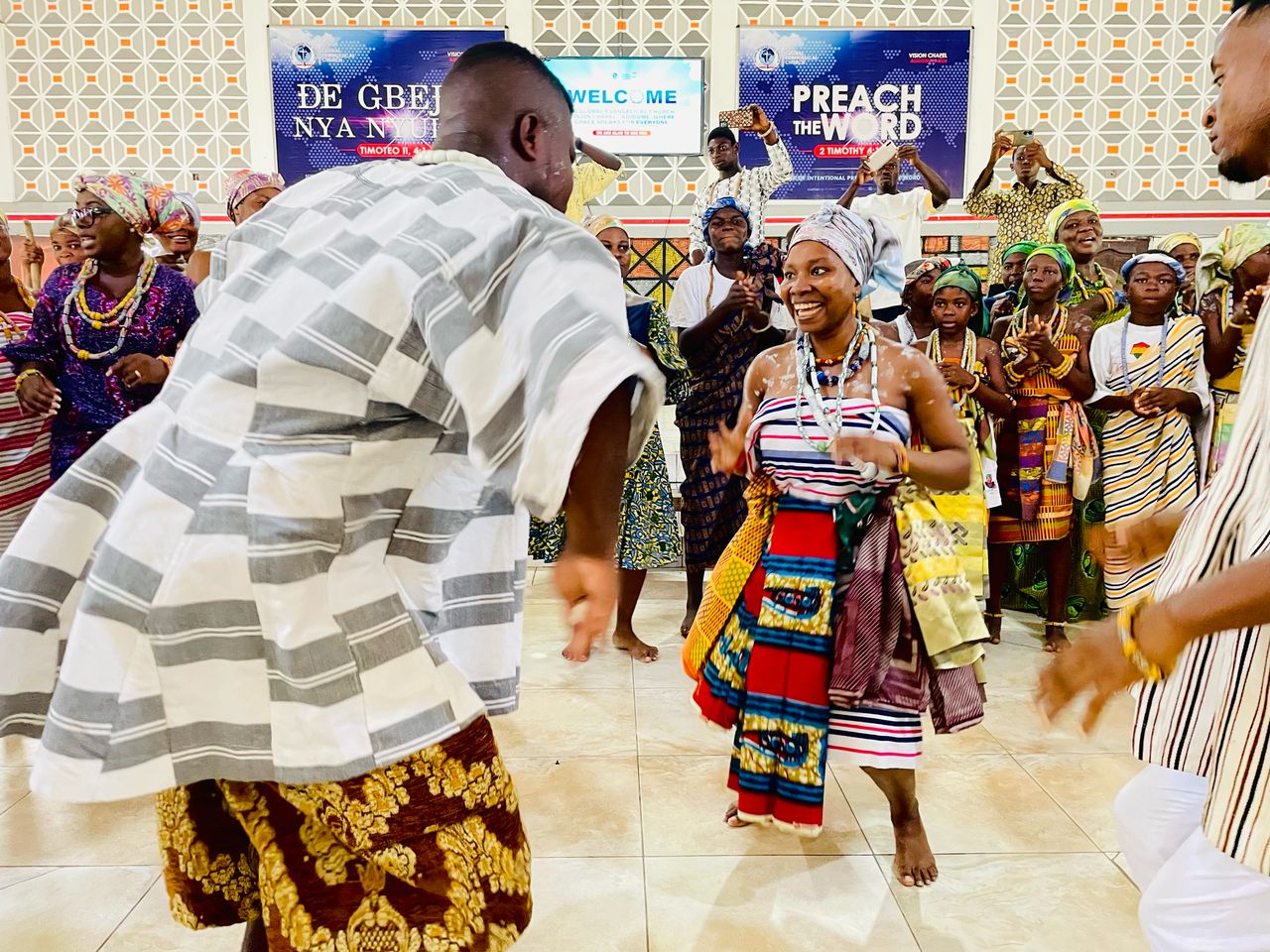
The Global Evangelical Church’s (GEC) Vision Chapel in Adidome has taken a unique approach to evangelism by incorporating cultural heritage into its ministry. As part of its Ghana Month celebrations, the church blended faith and tradition, demonstrating how culture can be a powerful tool in spreading the Gospel.
The event, which featured the traditions of the Anlo, Vedome, and Tongu people, went beyond cultural appreciation—it highlighted the church’s commitment to unity, integration, and contextual evangelism. Reverend Israel Kwasi Ahalie, the Parish Pastor, emphasized that embracing culture within Christian teachings fosters a deeper understanding of faith and enhances the Great Commission.
Reverend Ahalie explained that Ghana’s independence symbolizes more than political freedom; it also represents spiritual independence and the ability of Ghanaian Christians to express their faith within their cultural framework.
“The Gospel is not meant to replace culture but to transform it,” he said. “Culture serves as the platform for living out Christ’s teachings. The Great Commission calls us not just to individual conversion but also to the transformation of societies and nations.”
He cited Acts 17:22-28, where the Apostle Paul engaged with Greek philosophers using their own cultural references, as well as Revelation 5:8-13, which speaks of God’s redemption of people from all tribes and nations.
The event’s success demonstrated the potential of cultural appreciation in breaking barriers within the church. Congregants from different ethnic groups seamlessly participated in the vibrant drumming and dancing of Agbadza, Borborbor, Misego, and Kinka, making it nearly impossible to distinguish between Anlo, Vedome, and Tongu members.
The church’s approach suggests a model that other congregations could adopt to foster inclusivity, evangelism, and discipleship through cultural integration. By recognizing and celebrating cultural diversity, the GEC Vision Chapel is not only uniting its members but also redefining how the Gospel is communicated in local contexts.
With this initiative, the church is setting a precedent in the use of culture as a bridge to faith, reinforcing the message that Christianity and traditional heritage can coexist in a way that strengthens both spiritual and social identity.






