
















The Ministry of Local Government, Chieftaincy and Religious Affairs has outlined a centralised strategy for the nationwide rollout of the government’s 24-hour market initiative, describing it as a key socio-economic intervention designed to transform commercial activity across the country.
Minister Ahmed Ibrahim said the programme is being implemented under a uniform framework across all 261 Metropolitan, Municipal and District Assemblies (MMDAs), with the aim of ensuring consistency in design, construction, and operational standards.
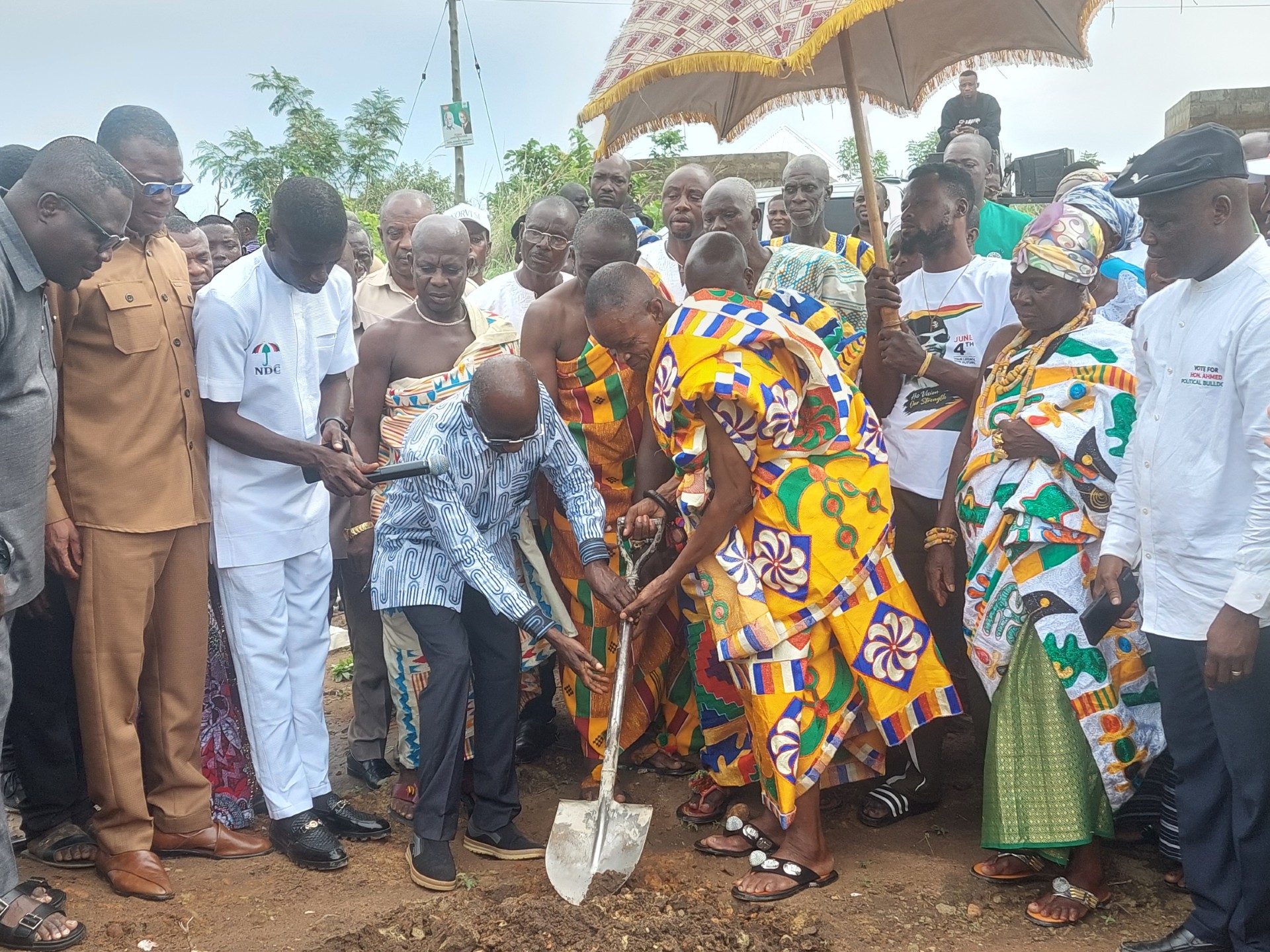
He made the remarks when he officially cut the sod for the construction of a 24-hour market at Bongase, a major commercial centre in the Banda District of the Bono Region.
According to him, the ministry has engaged 10 consultants to supervise the execution of the market projects across all 16 regions, ensuring that procurement processes, architectural designs, and construction works adhere strictly to approved specifications.
Mr Ibrahim explained that the decision to centralise implementation was intended to eliminate disparities that could arise if individual MMDAs were allowed to independently design and construct the markets.
“We want standardised structures across the country. If the assemblies handle it separately, each will adopt different approaches, but this initiative requires uniformity,” he stated.
He added that the 24-hour market concept has been designed in four different models, tailored to population size and available land in each locality. The largest model will occupy four acres, followed by three-acre, 2.5-acre, and two-acre variants.
The minister noted that construction has already begun on some of the projects, with foundation works progressing steadily in selected locations.
Turning attention to the Bongase project, Mr Ibrahim highlighted the economic importance of the area, particularly its vibrant fishing market, which attracts traders and buyers from across Ghana, including the Greater Accra and Northern regions.
He said that despite its commercial significance, the area lacks adequate market infrastructure to fully support trading activities.
He recalled his personal intervention in providing about six pavilions to support traders but stressed that more comprehensive infrastructure is needed to unlock the full economic potential of the enclave.
The minister expressed confidence that the new 24-hour market, once completed, would significantly improve trading conditions, boost local commerce, and contribute to the broader economic development of the Banda District.
He assured residents and traders that the project is expected to be completed within one year, adding that government remains committed to delivering modern, standardised market infrastructure nationwide as part of efforts to enhance productivity and economic growth.






