
















The Ghana Revenue Authority (GRA) has begun the nationwide rollout of the Integrated Tax Administration System (ITAS), a digital platform designed to overhaul tax administration, improve compliance and strengthen revenue mobilisation.
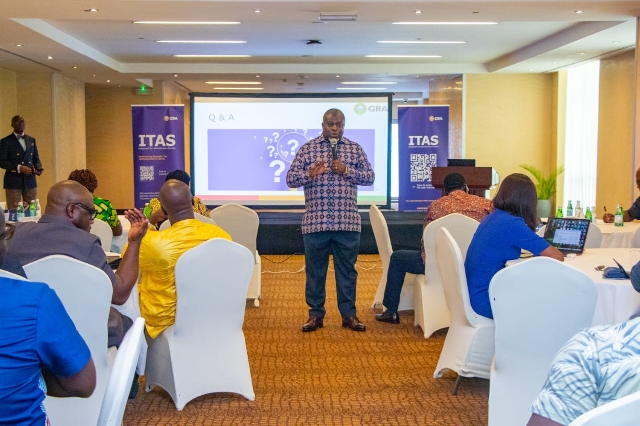
Announcing the development during a stakeholder engagement with media practitioners, Commissioner-General Anthony Kwasi Sarpong described the system as a major step toward modernising Ghana’s tax ecosystem and improving efficiency in service delivery.
He explained that ITAS will consolidate multiple tax processes into a single digital platform, giving the Authority a unified and real-time view of taxpayer activities while simplifying registration, filing and payment procedures.
According to Mr Sarpong, the project was first conceptualised in 2021 with an initial completion target of 2023. However, delays pushed implementation to 2024 before it was revived and officially launched on April 1, 2026.
The first phase of the rollout is currently focused on taxpayer registration, filing and payment services. More than 400 taxpayers from the Accra West Area Office have already been migrated onto the platform as part of the initial deployment.
The GRA expects full nationwide migration of all taxpayers onto ITAS by July or August 2026, marking a significant milestone in Ghana’s ongoing digital transformation of public revenue systems.
The Authority noted that the current tax administration structure, which relies on separate and unlinked systems, has long created challenges in data sharing and coordination. ITAS is expected to resolve these inefficiencies by integrating all core tax functions into one system.
As part of its second phase, the platform will be linked with key national institutions, including the Registrar of Companies, the Social Security and National Insurance Trust (SSNIT), the National Identification Authority (NIA), the Driver and Vehicle Licensing Authority (DVLA) and the Passport Office.
This integration is expected to enhance taxpayer verification, improve compliance monitoring and strengthen the accuracy of national tax records. It will also support international data-sharing arrangements to help Ghana track offshore assets for tax purposes.
The GRA has emphasised that the success of ITAS depends on strong public engagement and education. It has therefore called on the media to play a key role in sensitising citizens and supporting the rollout through continuous public awareness campaigns.
Officials further described journalists as essential partners in helping taxpayers understand the new system and adapt to the changes in tax administration.
The Authority also reiterated that improved tax compliance remains critical to national development, as it will enable government to finance infrastructure, social programmes and other key priorities.
Citizens have been encouraged to provide feedback during the rollout process to help refine the system and ensure its effective implementation across the country.






