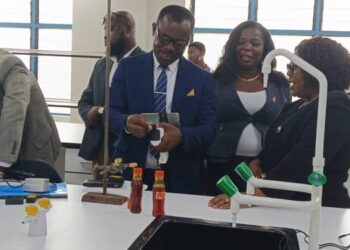
Traditional authorities in the Nzema area have thrown their full support behind plans to establish Ghana’s first Technical and Vocational Education and Training (TVET) and Science, Technology, Engineering and Mathematics (STEM)-focused college in the Jomoro Municipality of the Western Region.
The proposed Jomoro College of Education (JOCoE) is expected to play a key role in developing the technical and professional skills required to support future industrial activities in the region, particularly the proposed Petroleum Hub Development Project.
The project received unanimous backing from traditional leaders representing Beyin, Ezinlibo and neighbouring communities during a courtesy visit by a government delegation leading efforts to establish the institution.
Speaking on behalf of the traditional authorities, Awulae Agyefi Kwame III, Paramount Chief of the Jomoro Traditional Area and President of the Western Nzema Traditional Council, said the chiefs had fully endorsed the project.
“We have 100 per cent endorsed this project,” he said.
He said the proposed institution would not only expand access to tertiary education for young people in the area but also help develop the technical workforce needed to drive industrialisation in the Western Region.
According to him, the anticipated growth of the Petroleum Hub would create demand for people with specialised technical knowledge and practical skills.
“We will need technical skills and people with the technical know-how to support the Petroleum Hub. This project will help groom our children to become the workforce needed for such developments,” he stated.
The proposed college is being designed as a pioneering institution that will combine teacher education with TVET and STEM training.
Unlike traditional colleges of education, the institution is expected to equip future teachers with practical technical and technological competencies that can be transferred to learners and used to support Ghana’s evolving industrial and knowledge-based economy.
Technical Advisor to the Minister of Education, Professor George K.T. Oduro, who led the delegation, said the support of traditional authorities and local communities would be critical to the success of the project.
He said government policies and programmes could only achieve their intended objectives when they received strong support from stakeholders at the local level.
“Policies alone do not guarantee implementation. You need community support, stakeholder support and the support of traditional authorities,” he said.
Professor Oduro said the project was consistent with the government’s broader agenda of strengthening STEM education from the foundational level through tertiary education.
The delegation, which included officials from the Ministry of Education, the Ghana Tertiary Education Commission (GTEC), academia and members of the JOCoE Project Committee, was in the Western Nzema area for a four-day working visit.
As part of the visit, the team toured the Ghana Gas Processing Plant at Atuabo to explore opportunities for collaboration and regional development.
The delegation also engaged Members of Parliament, Municipal Chief Executives, Assembly Members and Municipal Directors of Education, and visited the Nzulezo stilt village.
With the backing of traditional authorities now secured, the proposed college is expected to serve as an important link between education, technical skills development and the industrial opportunities expected to emerge in the Western Region.