
















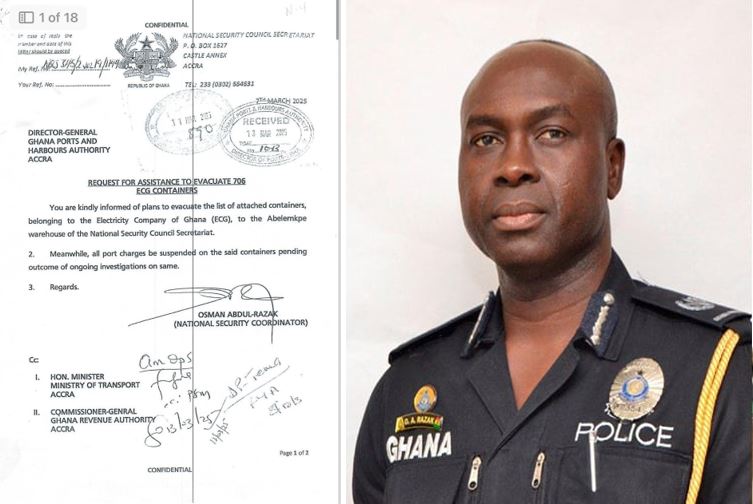
A confidential letter has surfaced, revealing disturbing claims that over 700 containers belonging to the Electricity Company of Ghana (ECG) were moved from the port to a warehouse in Abelemkpe under the current government’s watch.
The revelation has ignited a firestorm of controversy, with accusations of widespread corruption and theft within government ranks.
The intercepted document, which was initially set to be discussed on radio, appears to outline a chain of events that led to the disappearance of the containers.
These containers, allegedly containing goods worth an estimated $816 million, were evacuated by National Security forces between March 7th and March 13th, 2025, following confirmation by the Energy Minister, Mr. John Abdulai Jinapor, that the conta
iners were present as of January 25th, 2025.
However, despite the explosive nature of this disclosure, radio show hosts were allegedly pressured by powerful figures to retract the post and cease any further discussions on the matter, casting a shadow of suspicion over the government’s attempts to suppress the information.
The letter, which details the exact timeline and actions surrounding the movement of the containers, was allegedly authorized by Mr. Osman Abdul-Razack, the National Security Coordinator, a prominent appointee of President John Dramani Mahama.
The said letter was addressed to the Director General, Ghana Ports and Harbours Authority and it reads: “REQUEST FOR ASSISTANCE TO EVACUATE 706 ECG CONTAINERS: You are kindly informed of plans to evacuate the list of attached containers belonging to the Electricity Company of Ghana (ECG), to the Abelemkpe warehouse of the National Security Council Secretariat. Meanwhile, all port charges be suspended on the said containers pending outcome of ongoing investigations on same.”
The move to evacuate the containers occurred within the same time frame as the newly elected administration’s efforts to manage the aftermath of a controversial transition.
Critics have raised alarm over the involvement of government officials in what they describe as a “theft scheme” aimed at enriching those in power.
The missing containers are said to have been moved with the intent of misappropriating valuable assets, thereby undermining the nation’s financial interests.
Moreover, the alleged government’s aggressive stance in targeting the media and threatening those who expose such details has added fuel to the fire.
Despite attempts to silence the conversation, the confidential letter is now in the public domain, and citizens are increasingly questioning the integrity of those in leadership.
As investigations into the matter intensify, the Ghanaian public is demanding accountability. The case has sparked fierce debates over the role of the current administration, the credibility of state institutions, and the extent of corruption within the corridors of power.
This development has led many to wonder whether the true scale of mismanagement and corruption will ever be fully revealed, and what impact this scandal will have on the nation’s efforts to build a transparent and trustworthy government.






